The
Munich Security Conference 2025 and the Emerging Multipolar World
The
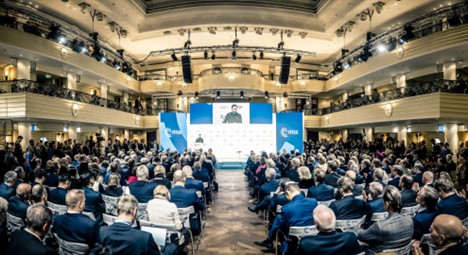
2025 Munich Security Conference (MSC), held on 14-16 February 2025, once
again served as a barometer for global power dynamics and the evolving contours
of international security. Often referred to as “Davos for security experts,”
the conference brought together over 60 heads of state and 150 ministers,
reflecting its enduring role as a premier platform for dialogue on global
threats and policy shifts. This year’s central focus was multipolarisation and
it captured the growing diffusion of power and influence across a widening set
of state and non-state actors, marking a decisive move away from the post–Cold
War unipolar order dominated by the West.
The
Conference underscored Europe’s growing determination to achieve greater
strategic autonomy and defense resilience in response to shifting global power
dynamics. European leaders expressed a clear desire to become more self-reliant
in security matters, emphasising the need to increase defence budgets and
develop a pan-European armed forces coalition capable of acting independently
of U.S. or NATO command structures. This push stems from both political
necessity, given the perceived unpredictability of U.S. foreign policy and the
broader recognition that Europe must safeguard its own geopolitical interests
in an increasingly multipolar world.
They
also emphasised the urgent need to protect their digital infrastructure from
cyberattacks and external interference, recognising that technological
self-reliance and robust cybersecurity are now fundamental pillars of national
and regional security.
The
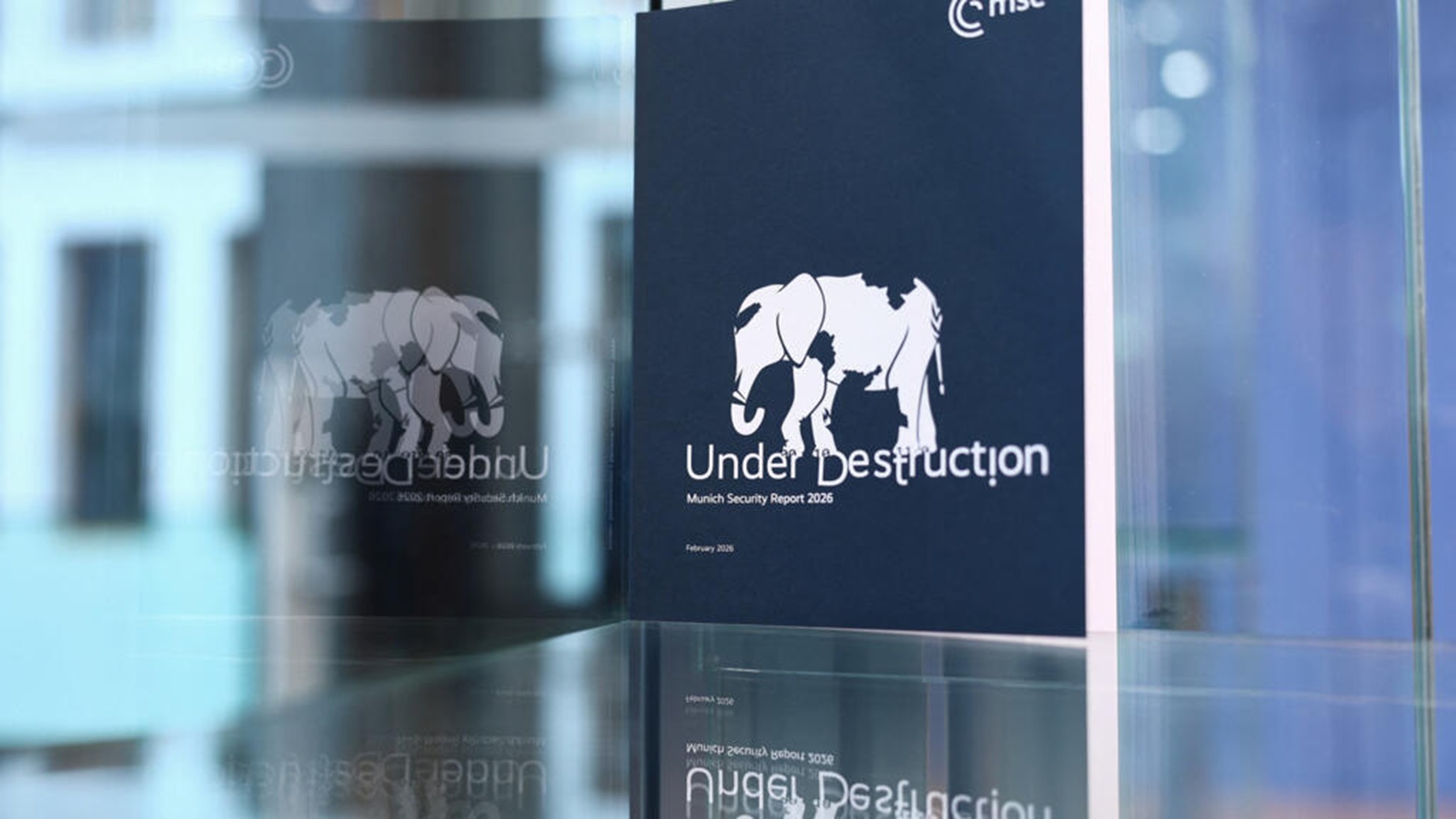
Munich Security Report 2025 focused on the concept of multipolarisation
not merely as a redistribution of global power but as a phenomenon intensifying
fragmentation. The proliferation of influential actors has made
consensus-building on global crises increasingly difficult. Issues such as
climate security, cyber threats, and geopolitical conflicts now unfold in an
environment of competing national priorities and ideological divides. The
report highlighted that polarisation (both within states and between them) has
deepened, thereby undermining collective responses to global challenges.
Transatlantic Family Disunion
One
of the most striking outcomes of this year’s MSC was the growing fissures
between the United States and Europe. With President Trump’s renewed engagement
in foreign policy marked by overtures to Russia’s President Putin, concerns
mounted about America’s potential withdrawal from its historical role as
Europe’s security guarantor. This realignment poses serious implications for
NATO’s future and for the security architecture underpinning Europe’s response
to the Ukraine crisis. European leaders are consequently caught between
dependence on NATO and an urgent desire for strategic autonomy, a tension that
may reshape the continent’s defense posture and policy coherence in the coming
years.

The conference also underscored the
rise of populism in foreign policy, particularly as nationalist rhetoric
increasingly informs diplomatic decision-making. JD Vance’s speech exemplified
this trend, appealing simultaneously to domestic and international audiences.
His remarks emphasised a redefinition of U.S.–Europe relations grounded in
“differences in values” rather than shared liberal ideals, suggesting a waning
commitment to the multilateral, rules-based order long championed by Western
powers. This shift implies that U.S. foreign policy may become more
transactional and narrowly focused, with Washington’s strategic lens oriented
primarily toward its competition with Beijing.
For smaller states such as Bangladesh, these developments present both challenges and opportunities. The fragmentation of the global order may reduce the predictability of major power behaviour, increasing vulnerability for nations dependent on stable multilateral systems. Yet, a multipolar world also opens space for diversified partnerships and more agency in shaping diplomatic alignments. Navigating this complex environment will require Bangladesh to maintain a delicate balance between its economic and strategic interests, strengthening regional cooperation while engaging constructively with multiple global poles of power.

In
essence, the 2025 MSC highlighted the fact that the international system is in
flux; defined by disunity among traditional allies, the politicisation of
foreign policy, and the emergence of multipolar contestations. The challenge
ahead lies in transforming this fragmentation into a foundation for adaptive
and inclusive global governance rather than an era of heightened rivalry and
instability.