Munich Security Conference 2026: A Review
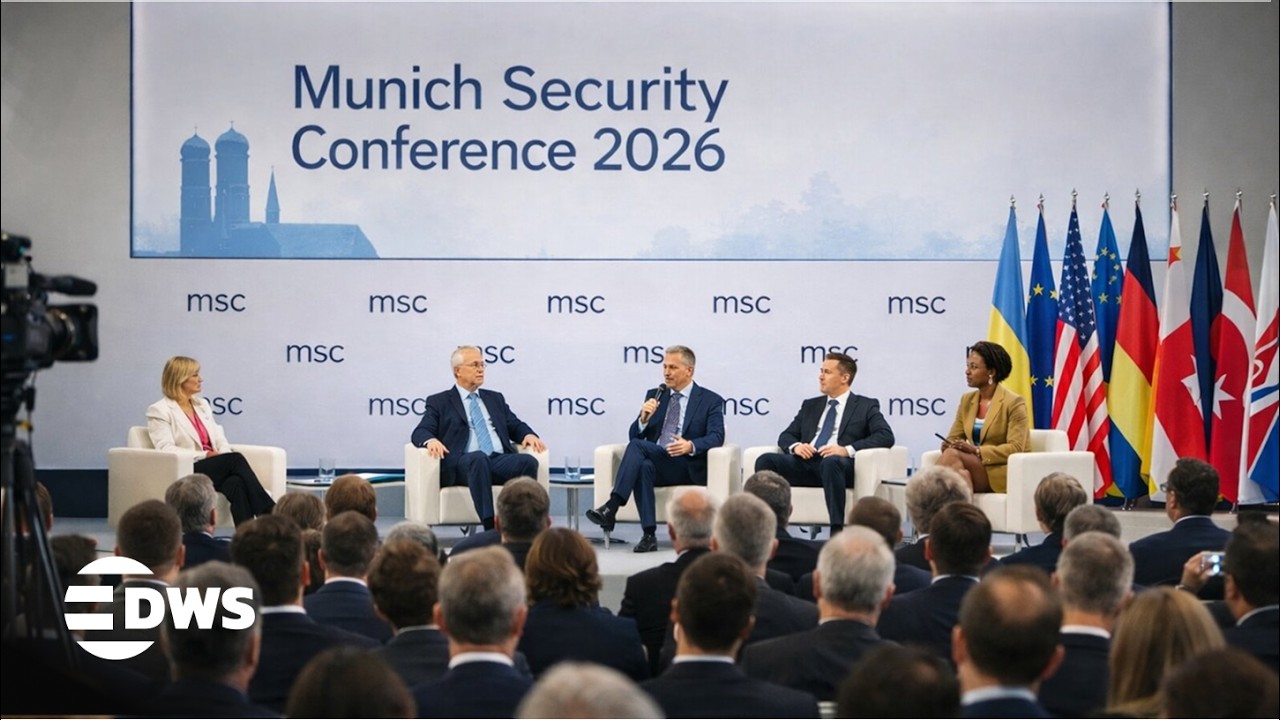
The 2026, Munich Security Conference, convened from 13 to
15 February with more than 40 Heads of State and Government in attendance,
offered what may be the starkest diagnosis of the international order in the
conference’s six-decade history. Its central finding was unambiguous: the
post-1945 rules-based system is under active deconstruction, but not by its
traditional adversaries, but by the power that architected it. The implications
of that finding extend well beyond Europe.
The 2026 Munich Security Report, titled “Under
Destruction,” characterised current US foreign policy as “wrecking-ball
politics”: a deliberate preference for institutional disruption over principled
cooperation, and for transactional bilateral deals over sustained multilateral
engagement. The report identified the root cause not merely in electoral
politics, but in a deeper structural phenomenon: a widespread disenchantment
with the performance of democratic institutions and a consequent loss of public
confidence in incremental reform. The result is a foreign policy posture in
which breaking institutional inertia is treated as a strategic objective in
itself.
The risk landscape mapped at Munich underscores how
deeply this shift has decoupled global threat perceptions. G7 nations ranked
cyberattacks, Russia, and disinformation as their primary concerns. BICS
countries (Brazil, India, China, and South Africa) placed extreme weather,
climate change, and inequality at the top of their risk registers. What
appeared in both lists, however, was the United States itself. For the first
time in the conference’s history, the US was identified as a major source of
global risk by allies and strategic competitors alike, principally due to the
weaponisation of trade. This is not a marginal finding; it represents a
fundamental reordering of how Washington is perceived across the international
system.
Secretary of State Marco Rubio's appearance at the
Munich Security Conference offered a study in controlled contradiction. Compared
to Vice President JD Vance’s speech delivered last year, the tone was
conciliatory; the substance was not. Rubio’s approach was quickly termed as
"charm offensive" by many analysts, but "America First"
remained the operative doctrine. Rubio made it clear that alliance
relationships with Europe are conditional arrangements in which partners are
expected to demonstrate self-sufficient defence capabilities before
Washington's commitments can be relied upon. Simultaneously, the administration
continued to advance the Greenland acquisition narrative and maintain the
threat of broad tariff escalation, which contradicted any rhetorical outreach.
Perhaps most consequentially, the philosophical underpinning of US engagement
has shifted: where the postwar order was organised around universal norms and
shared institutional obligations, the current administration has substituted
the concept of “shared civilisation”, a framework that is both narrower in
scope and more selective in application. Munich cautioned US allies in Europe
and beyond to plan for the alliance they can realistically expect.
Europe’s response has been one of forced adaptation.
German Chancellor Friedrich Merz and French President Emmanuel Macron both
argued for a “sovereign Europe” capable of independent defence. This was not a
rejection of the transatlantic alliance, but a recognition that its reliability
can no longer be assumed. Simultaneously, the conference confirmed that
technology has become inseparable from security: artificial superintelligence,
cyber resilience, and intelligence-sharing architecture are now treated as core
national security pillars rather than peripheral policy considerations.
Into this vacuum, China has moved with deliberate
purpose. Foreign Minister Wang Yi’s address at Munich promoted a framework of
“harmony without uniformity”; the proposition that nations with divergent
political systems can cooperate without ideological convergence. Where the
Munich Security Report cast the US as a destabiliser, China positioned itself
as an anchor of stability, advancing four organising principles: revitalising
the UN system, promoting broad multilateral collaboration, rejecting Cold War-era
bloc formation, and committing to the political resolution of active conflicts.
Whether this framing reflects genuine strategic intent or sophisticated
narrative positioning, its appeal to a Global South frustrated by Western
conditionality, trade tariffs, and a perceived “West-West” preoccupation with
Ukraine is difficult to dismiss.
The conference’s conclusions carry direct implications
for states in the Global South, including Bangladesh. The weaponisation of
trade, severe reductions in international development assistance, and the
erosion of the multilateral frameworks through which climate finance and
humanitarian aid are channelled represent compounding and simultaneous
pressures. For countries that cannot independently absorb these shocks, the
transition from a norms-based to a transactional international order is not an
abstract geopolitical concern. It is a governance and development emergency
arriving in real time. Like many other countries, Bangladesh too, much contemplate
about what it has to offer in diplomatic negotiations.
Munich 2026 did not produce a consensus on how to arrest
these trends. What it did produce was clarity: the international system is
moving from principled cooperation toward transactional deals, from universal
norms toward regional hegemons, and from public goods toward private interests.
Reversing that trajectory will require states invested in the rules-based order
to build their own power resources, including enhanced technological and
military capability with considerably greater urgency than most have yet
demonstrated.