Year in Review 2025: Major Global Political, Economic and Security
Developments
The year 2025
represented a significant turning point in global politics, security, and
economic governance. Rather than the cooperative multilateralism that characterised
the early post–Cold War decades, international relations increasingly reflected
a return to power politics, geopolitical rivalry, and economic coercion. Major
powers prioritised national security and strategic advantage, often at the
expense of established international institutions and norms.
One of the
defining global trends in 2025 was the shift toward realpolitik. Multilateral
institutions such as the United Nations and the World Trade Organization faced
growing paralysis as major powers bypassed formal mechanisms and pursued
unilateral or bloc-based strategies. At the same time, multiple crises unfolded
simultaneously, including ongoing wars, trade conflicts, energy price
volatility, and technological competition. These overlapping disruptions
contributed to increasing fragmentation in global trade and finance,
heightening geopolitical risk and uncertainty.
Political
developments also reflected broader structural changes. In the United States,
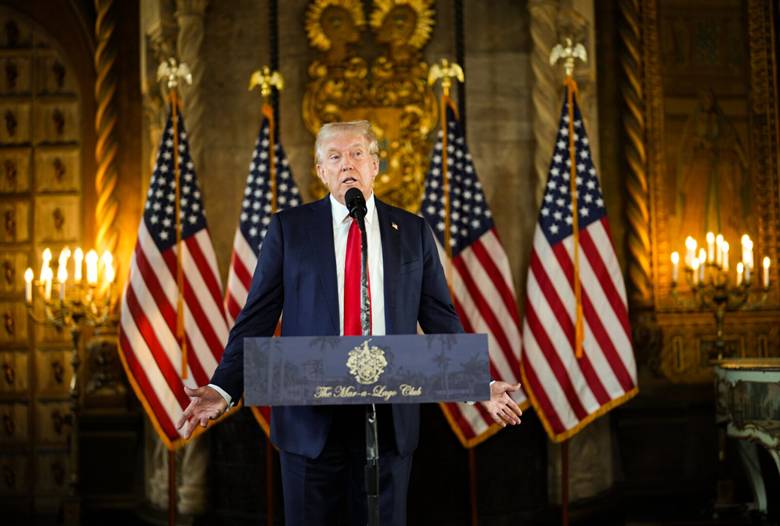
the political return associated with the “Trump 2.0” phenomenon symbolized a
broader resurgence of populist-nationalist politics and skepticism toward
multilateral governance. Across several regions, governance increasingly
shifted toward leader-centric systems, where executive authority strengthened
while parliamentary oversight weakened. Such trends contributed to democratic
backsliding in many countries and encouraged the rise of illiberal governance
practices and economic protectionism.

Economic
tensions were another defining feature of the year. Trade policy increasingly
became a strategic instrument rather than a purely economic mechanism. Tariffs,
sanctions, and export controls were widely used as tools of geopolitical
leverage. The intensification of the United States–China trade confrontation
was particularly significant, as tariff rates on Chinese imports rose sharply
during 2025 before partial adjustments later in the year. These measures
contributed to higher consumer prices, supply chain redundancies, and increased
uncertainty for global investment and production networks.
Security
developments in the Middle East further destabilized the global environment.
The outbreak of the Iran–Israel “12-Day War” marked an unprecedented escalation
involving direct missile exchanges between the two regional powers. United
States military intervention, including targeted strikes on Iranian facilities,
redefined the strategic boundaries of nuclear deterrence in the region.
Although the conflict ended with a ceasefire, it produced no comprehensive
political settlement and instead restored a condition of “managed instability.”
The war also contributed to a temporary spike in global oil prices,
illustrating the continued link between regional conflict and global energy
markets.
Meanwhile, the
Russia–Ukraine war remained unresolved and evolved into a prolonged military
stalemate. Russian forces expanded territorial control in eastern Ukraine,
while Western military support continued but faced growing political debate
within NATO member states. In response to the conflict, Europe accelerated
defense cooperation and industrial production, while NATO strengthened its
eastern flank with the integration of Finland and Sweden into the alliance’s
operational structure.
Within this
turbulent international context, Bangladesh faced complex economic and
geopolitical pressures. Domestically, governance remained characterized by
strong executive authority and a development-focused political model.
Internationally, Bangladesh navigated intensifying strategic competition
between major powers while maintaining crucial economic relationships with
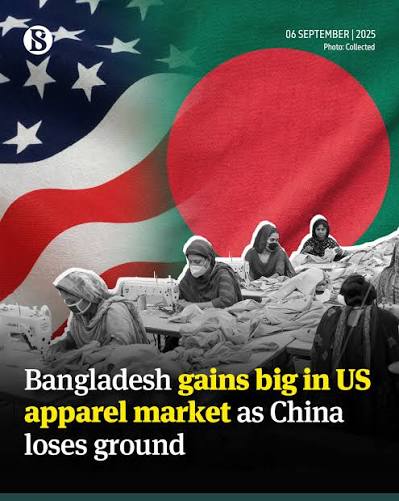
Western markets. The country’s export-driven economy—particularly the
ready-made garment sector—remained vulnerable to fluctuations in global demand,
tariff policies, and energy prices. Additionally, inflationary pressures,
currency volatility, and the management of foreign exchange reserves posed
ongoing macroeconomic challenges.
Overall, 2025
demonstrated that the international system is undergoing a structural
transformation. Global integration has not disappeared, but it has become more
selective and security-driven. Economic efficiency is increasingly sacrificed
for strategic resilience, while geopolitical competition shapes trade,
technology, and energy policy. As a result, instability is no longer simply an
exception within the global system—it has become a managed and persistent
condition shaping the emerging international order.