Bangladesh Institute of International and Strategic Studies
Bangladesh Institute of International and Strategic Studies
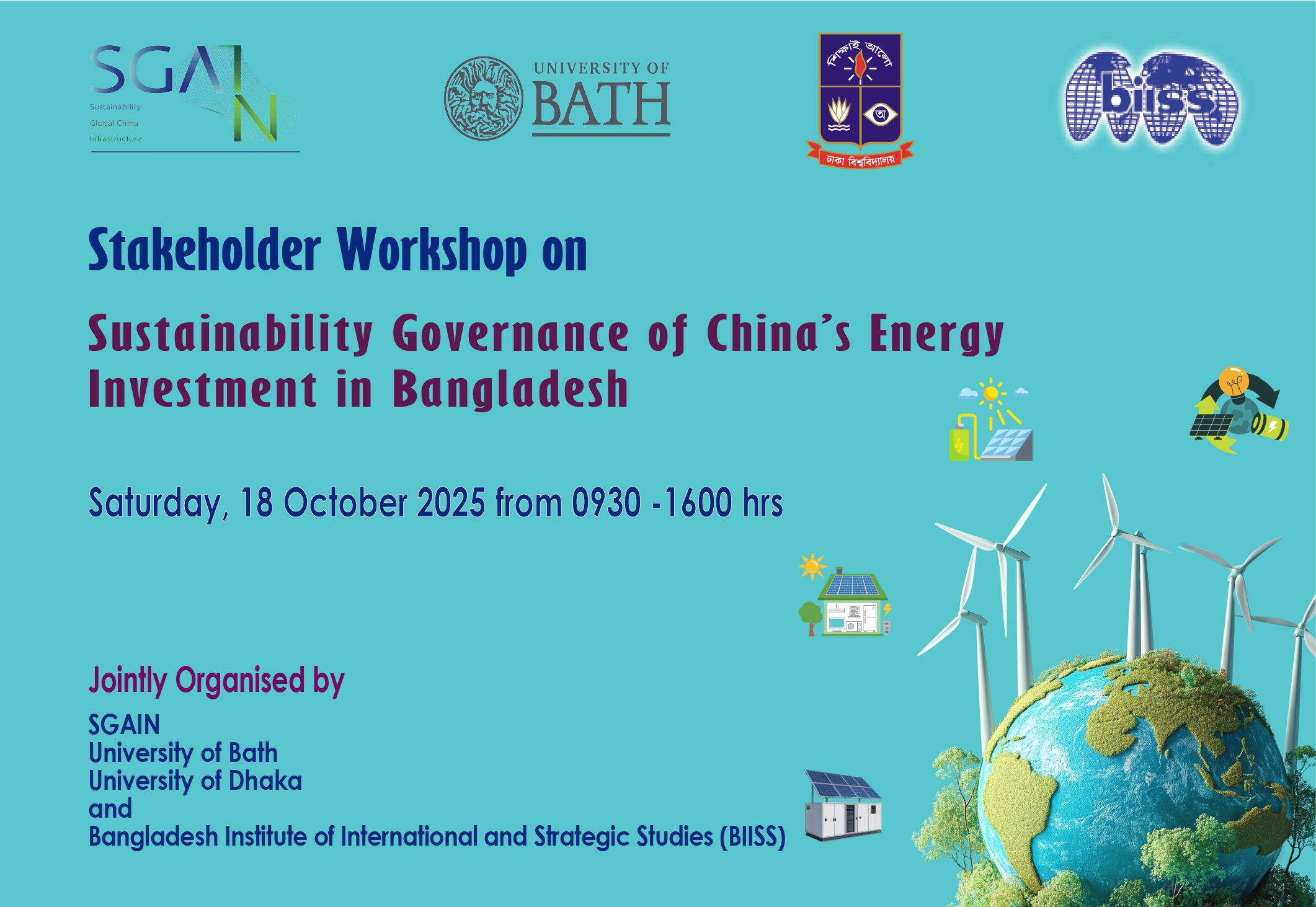
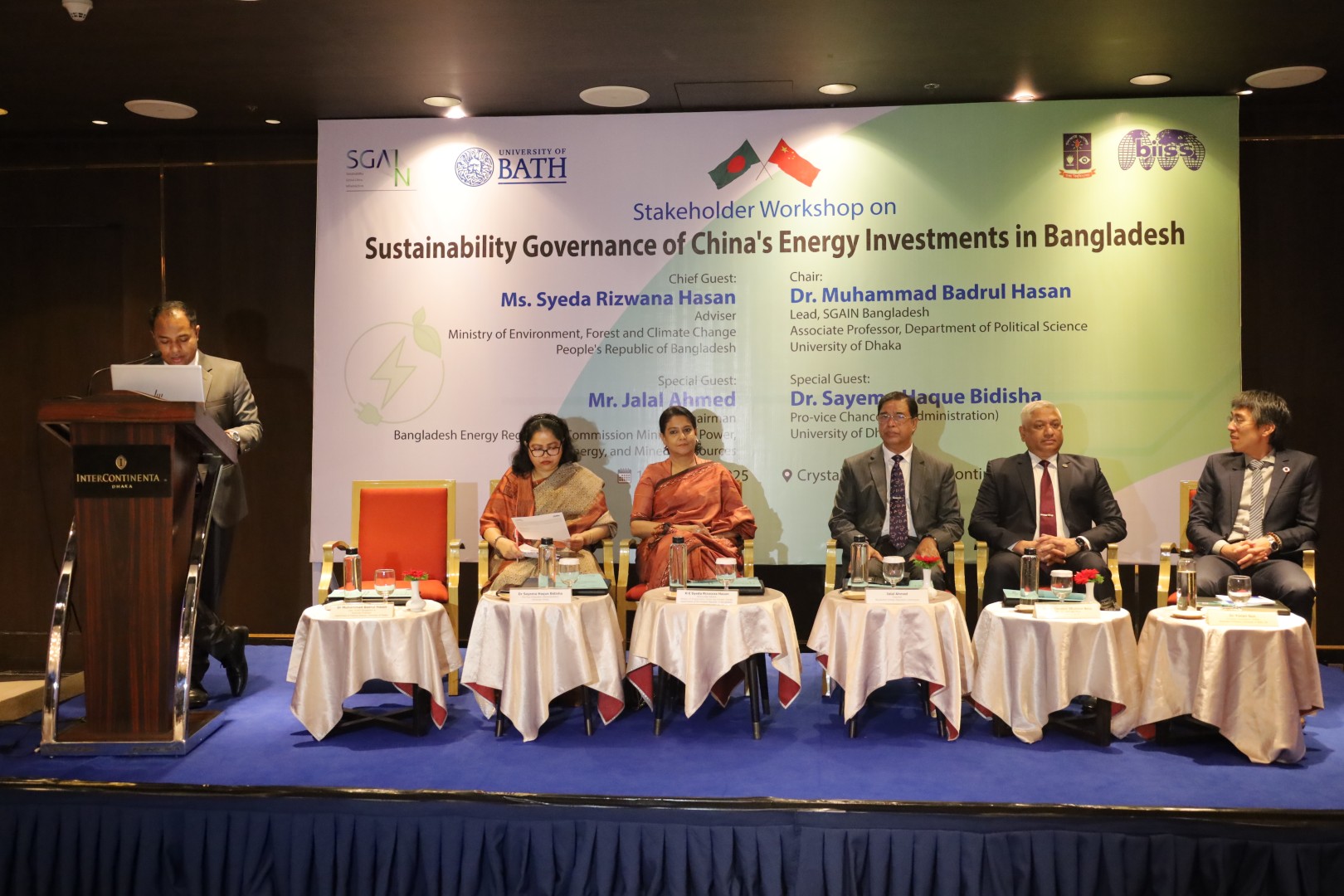
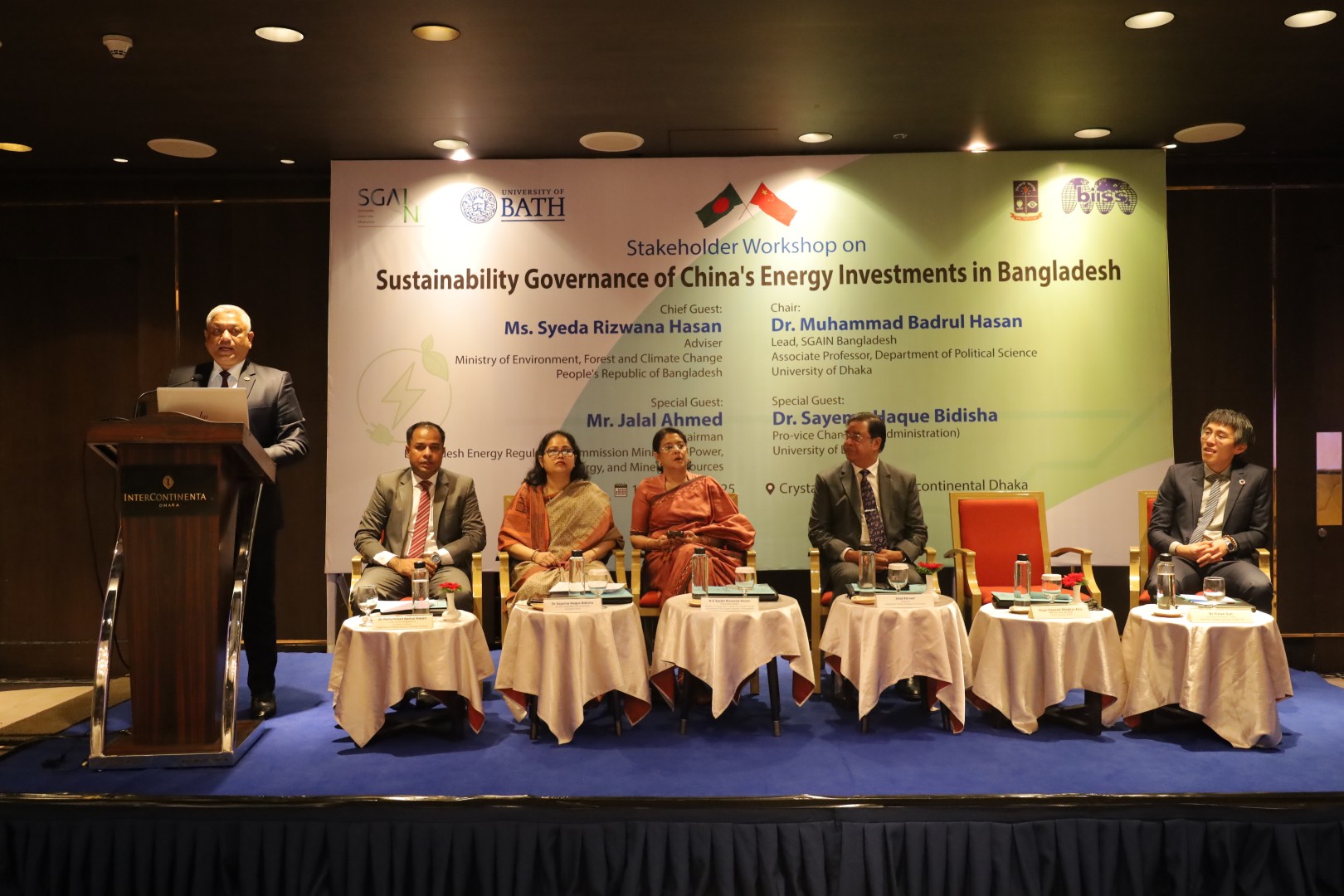
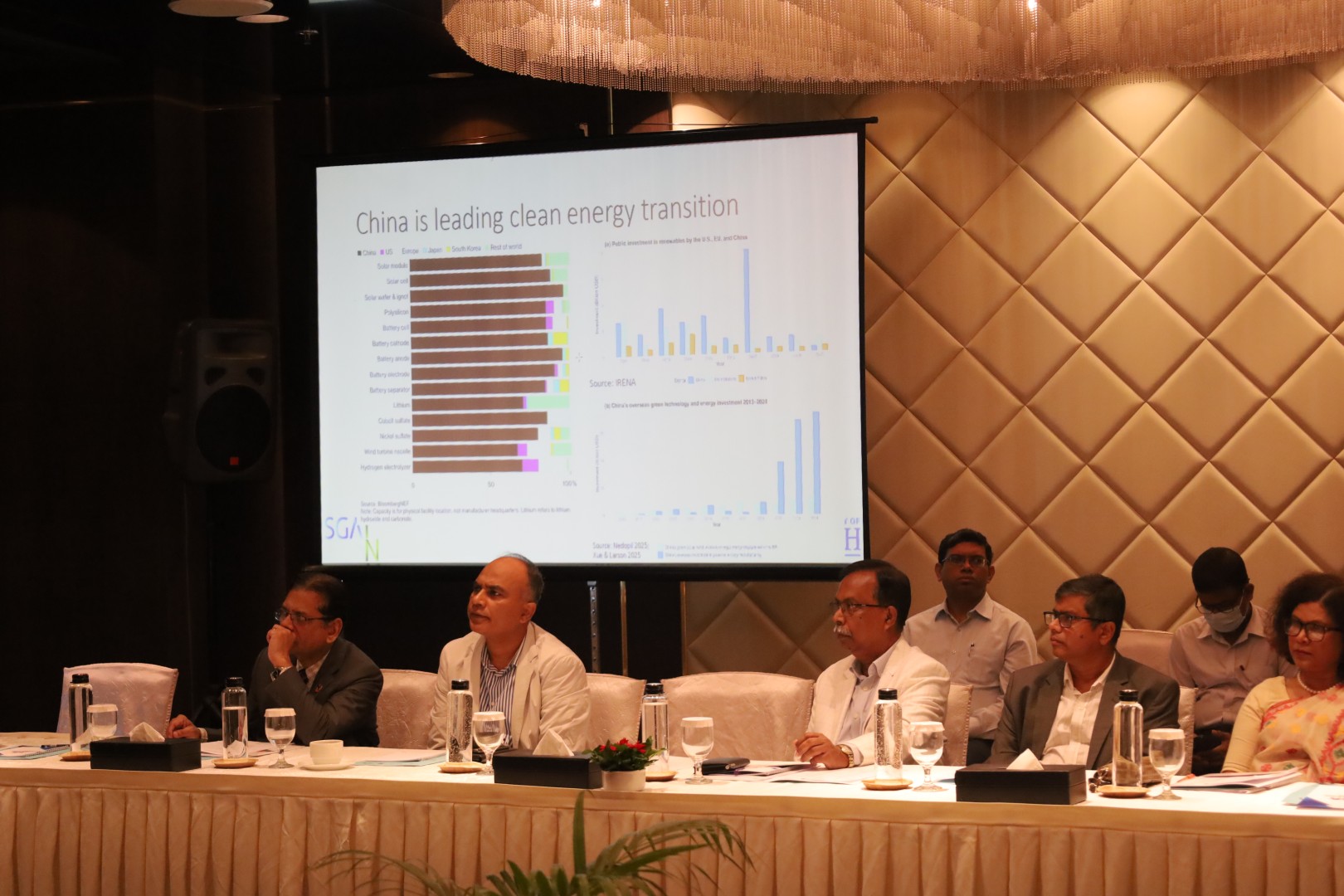
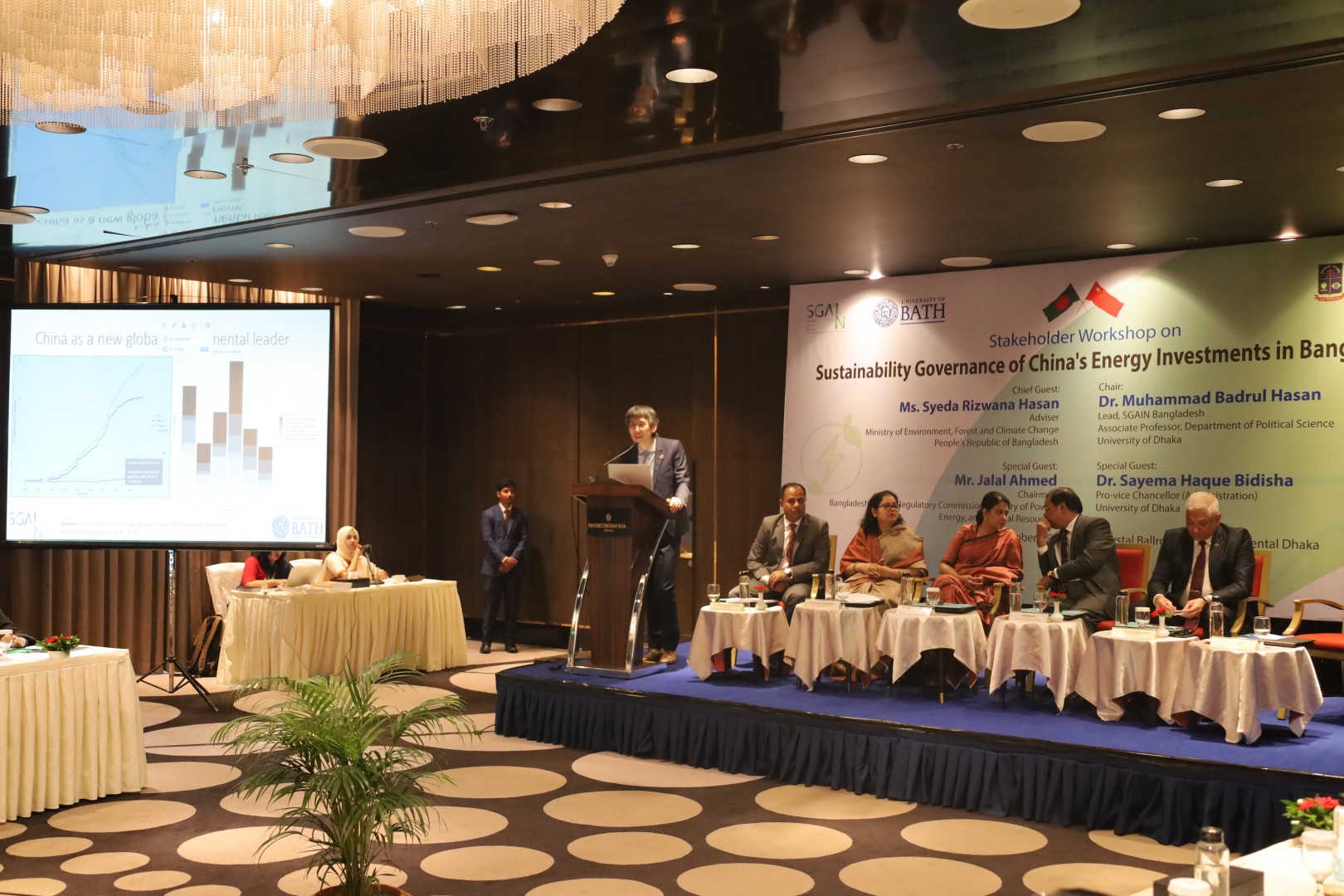
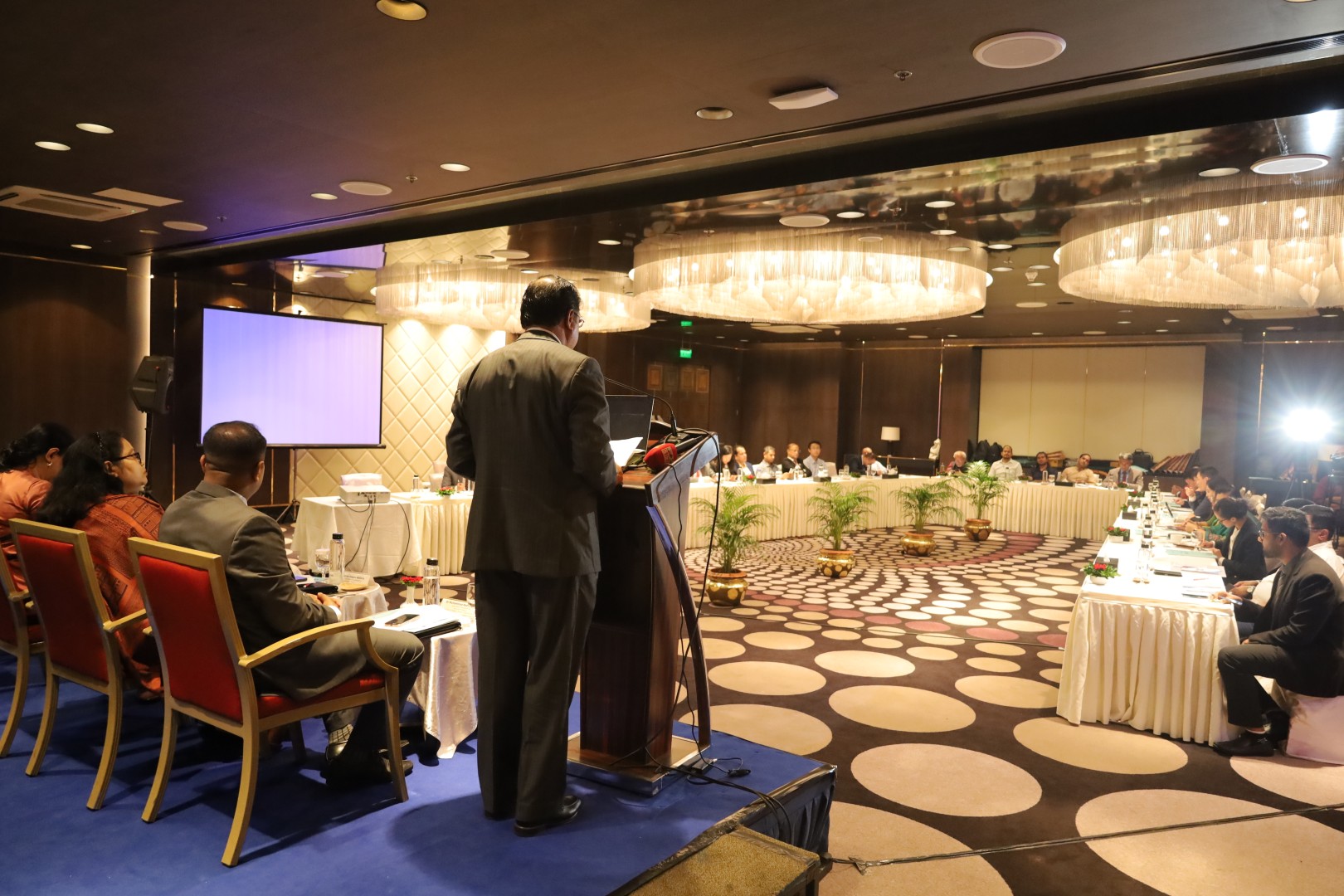
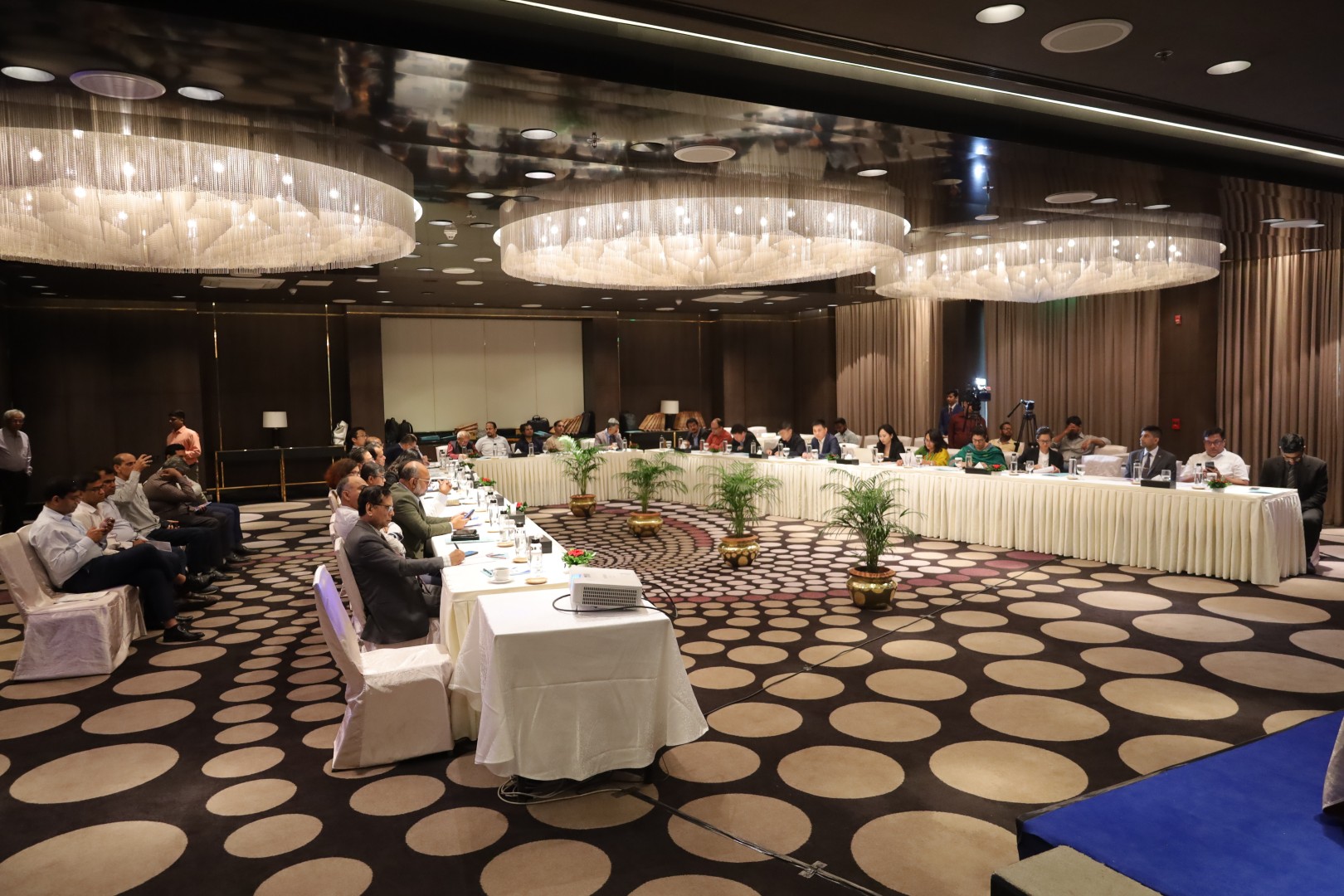
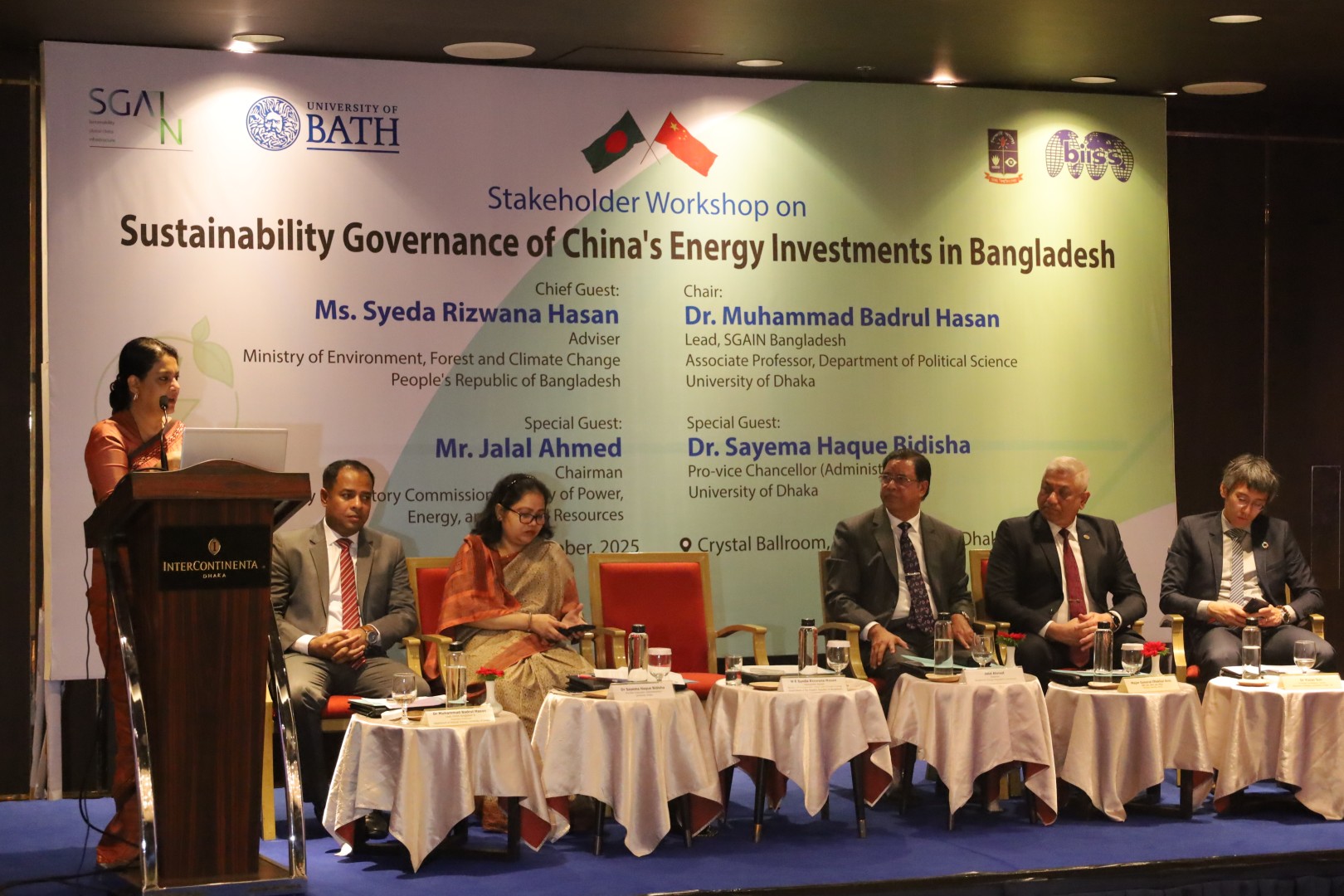
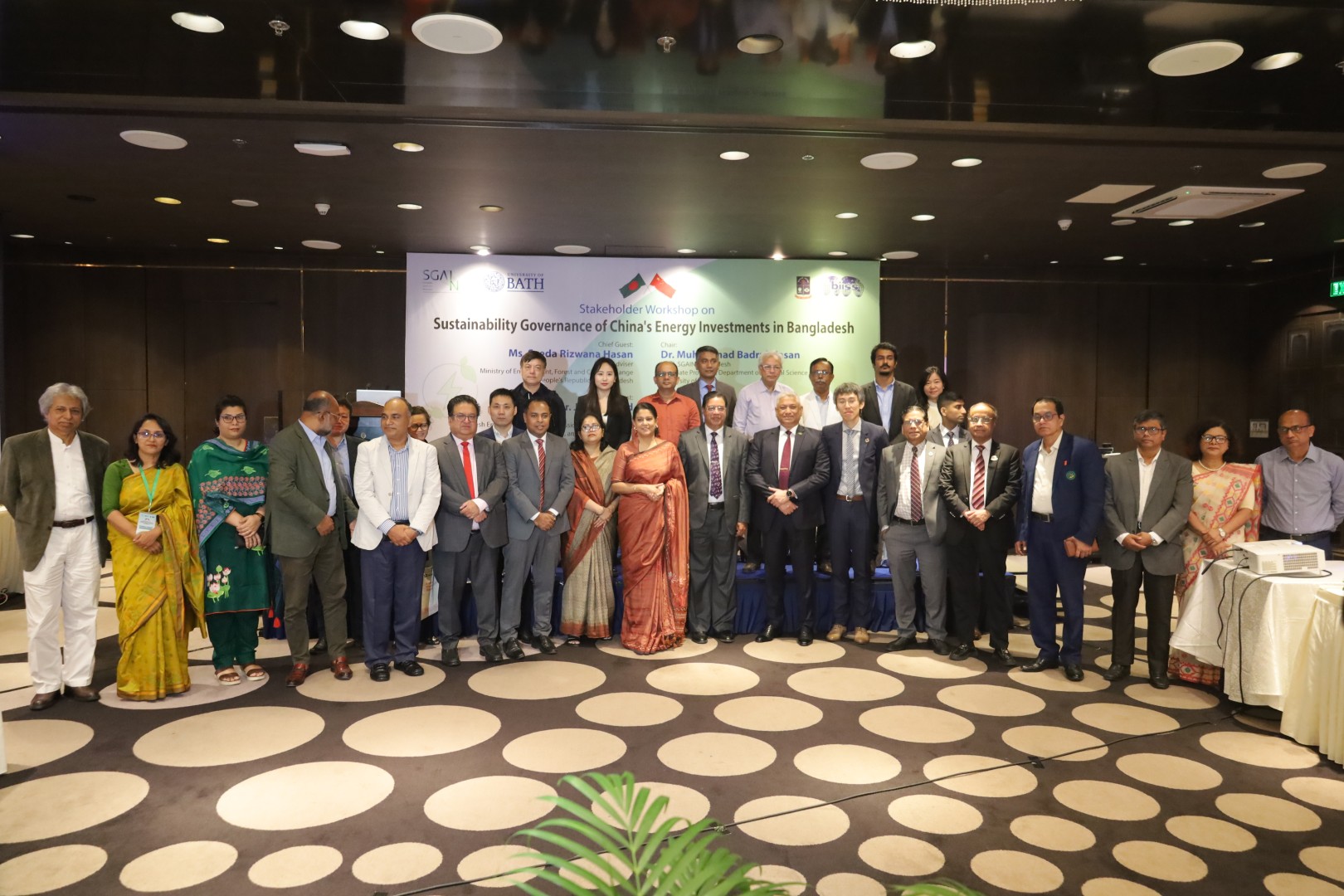
The Sustainable Governance of China's Energy Investment (SGAIN), the University of Bath, the University of Dhaka, and the Bangladesh Institute of International and Strategic Studies (BIISS) jointly organized a day-long stakeholder workshop titled “Sustainability Governance of China’s Energy Investment in Bangladesh” on Saturday, 18 October 2025
The inaugural session commenced with welcome remarks from Dr. Muhammad Badrul Hasan, Lead of SGAIN Bangladesh and Associate Professor at the University of Dhaka, followed by introductory remarks from Major General Iftekhar Anis, BSP, awc, afwc, psc, PEng, Director General of BIISS
The workshop's technical program featured three specialized thematic working sessions
Working Session I (Five Decades of Bangladesh-China Relations: Challenges and Opportunities Ahead): Moderated by Dr. Mustafizur Rahman, Distinguished Fellow at the Centre for Policy Dialogue, this session examined the broader diplomatic and economic history
Working Session II (Bilateral Cooperation between China and Bangladesh for Net Zero and Energy Transition): Moderated by Mr. Shafiqul Alam, Lead Analyst at the Institute of Energy and Financial Analysis, this segment focused on cleaner transition pathways
Working Session III (China’s Role in Green Industrialization in Bangladesh): Moderated by Dr. AK Enamul Haque, Director General of the Bangladesh Institute of Development Studies, this final session assessed environmentally sustainable economic development
The workshop concluded with a comprehensive synthesis of key takeaways and concluding remarks delivered jointly by Dr. Yixian Sun, Dr. Mahfuz Kabir, and Dr. Muhammad Badrul Hasan
To evaluate bilateral energy cooperation: Reviewing the historical context and five-decade evolution of Bangladesh-China relations to navigate upcoming investment opportunities and strategic challenges
To align infrastructure with Net-Zero goals: Exploring collaborative technological and regulatory pathways between Dhaka and Beijing to advance renewable energy capacity and scale up the domestic energy transition
To promote green industrialization: Assessing environmental compliance, environmental clearance mechanisms, and investment frameworks to foster eco-friendly growth across major domestic manufacturing sectors like RMG
To enhance sustainability governance: Bridging international academic research with actionable regulatory policy by identifying governance benchmarks for large-scale foreign direct investments (FDI)
To build cross-sectoral multi-stakeholder consensus: Convening government administrators, private trade associations, environmental advocates, finance houses, and researchers to outline unified solutions for sustainable energy governance