Bangladesh Institute of International and Strategic Studies
Bangladesh Institute of International and Strategic Studies
Alternative Trading Arrangements
Bangladesh Institute of International and Strategic Studies
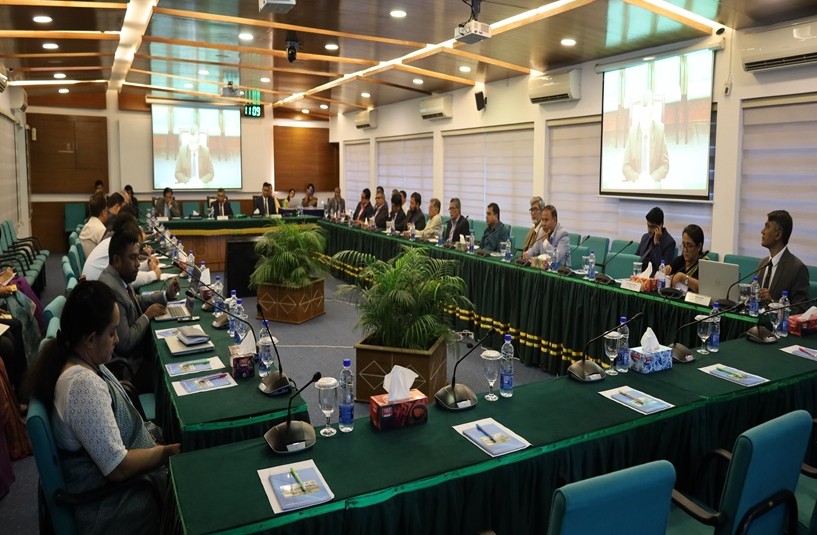
(BIISS) organised a Roundtable Discussion on “Strategic Autonomy of Bangladesh:
Alternative Trading Arrangements” on 26th October 2023 at the BIISS auditorium.
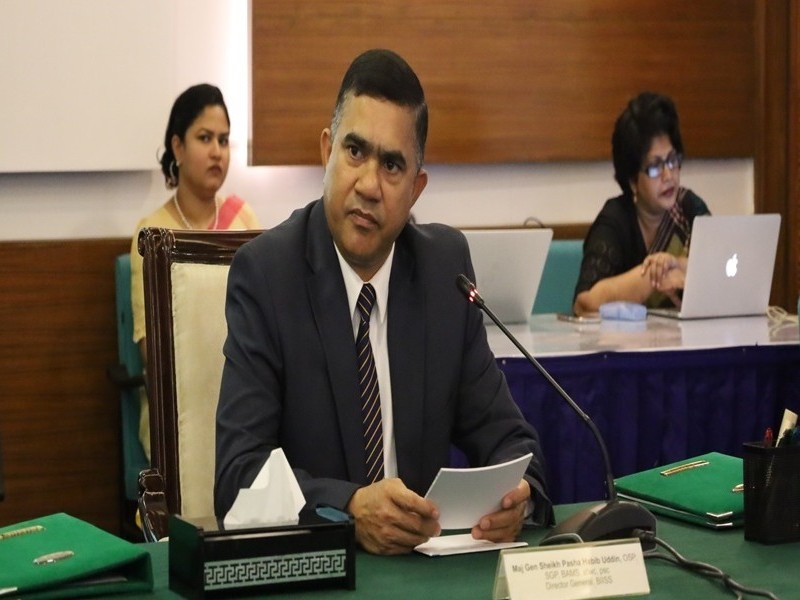
Director General of BIISS Major General Sheikh Pasha Habib Uddin, OSP, SGP,
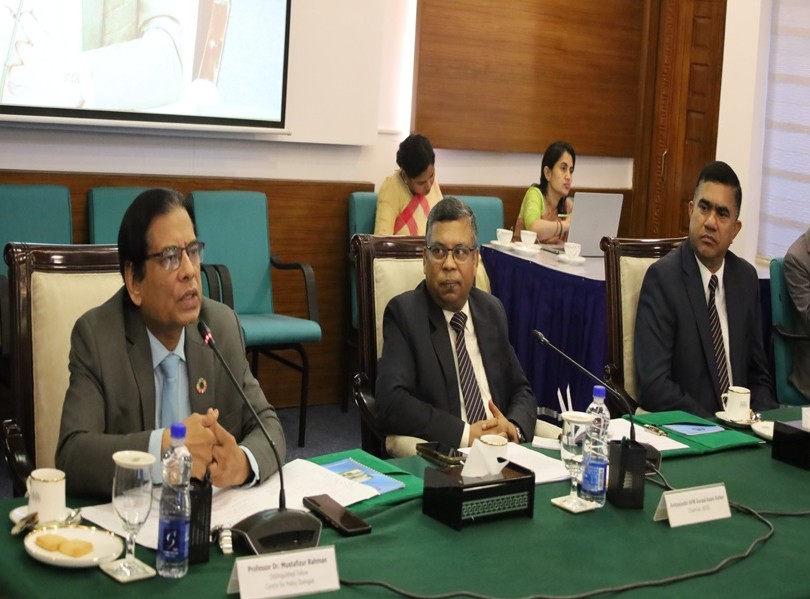
BAMS, afwc, psc delivered the Welcome Address. Ambassador AFM Gousal Azam
Sarker, Chairman, BIISS Chaired the Roundtable Discussion and delivered the
Closing Remarks. In his Welcome Address, Director General of BIISS Major
General Sheikh Pasha Habib Uddin, OSP, SGP, BAMS, afwc, psc noted that
currently, the global economy has been going through a sequence of turbulent
events. With the inflationary pressure created in the post-pandemic period and
culminated by the onset of the Russia-Ukraine war, least-developed and
developing countries are struggling with the adverse effects of currency
depreciation or devaluation and the dollar crisis. The foreign exchange crisis
does not only create pressure on foreign exchange reserves, but it also limits
a country’s financial and economic maneuverability. In this regard, he opined
that the roundtable discussion would help to comprehend the potential options
and pathways that Bangladesh may consider for addressing the ongoing dollar
crisis while keeping the challenges in view. Three presentations were
delivered in the Roundtable Discussion. Dr Benuka Ferdousi, Senior Research
Fellow of BIISS delivered a presentation titled "Alternative Trading
Arrangements: Options, Opportunities and Challenges for Bangladesh". Dr
Mahfuz Kabir, Research Director of BIISS, delivered a presentation on
"Supremacy of US Dollar and the Future of other Currencies: Trading
Options for Bangladesh". And Professor Dr Mustafizur Rahman, Distinguished
Fellow, Centre for Policy Dialogue (CPD) also delivered a presentation in the
Roundtable Discussion. Dr Benuka Ferdousi, Senior Research Fellow of BIISS,
while delivering her presentation identified major barriers to alternative
trading arrangements such as Bangladesh’s huge trade gaps with import partners
which makes it problematic to conduct such practices, lack of interest from
exporters from both ends and various levels of geopolitical repercussions while
trading with BRICS countries. According to her, if Bangladesh goes for trade in
an alternative currency, then this trade should be limited to the export
earnings of that currency. Bangladesh should not go for alternative trading
arrangements by selling its dollars, which can further weaken the country’s
foreign currency reserves. She also emphasised that Bangladesh should not or
need not be hurry. According to her understanding, to date, Bangladesh is not
in such a desperate situation to jump into this practice, therefore, Bangladesh
should be cautious and watch and learn from other countries’ experiences.
Finally, she suggested that Bangladesh should avoid financial turbulence and
geopolitical repercussions and take small and incremental steps. While
delivering the presentation, Dr Mahfuz Kabir, Research Director of BIISS, noted
that not only Bangladesh but also all other countries are facing the dollar
crisis. And with one year from the last quarter of 2021 to the last quarter of
2022, trillion dollars has disappeared and this is the primary blow to the
international financial system. The problem is mainly exacerbated due to the
global pandemic and the onset of the Russo-Ukrainian War. In addition to that,
other major currencies like the Euro, Japanese Yen and Chinese Yuan, could not
effectively replace the dominance of the US dollar. Hence, he suggested
adopting new options and diversifying the payment system.Furthermore, for
medium-term businesses, the Japanese Yen can be a viable option among others as
Japan is working on various mega projects in Bangladesh including the Matarbari
deep-sea port project. Prior to that, signing agreements with central banks of
different countries is very crucial. Professor Dr Mustafizur Rahman,
Distinguished Fellow, Centre for Policy Dialogue (CPD) in his presentation
echoed with his previous speakers and mentioned that the economy is passing
through a telling time as our forex reserve and exchange rate are under
pressure. He opined that Bangladesh needs to grasp that diversification is the
name of the game and therefore, it should not be dependent on a single
currency, single product and limited export destination. However, he thinks
that the dollar will be the leading currency for the foreseeable future, so,
Bangladesh needs to be cautious and go incrementally. Finally, he opined that
although we need to explore alternatives, it has to be in limited scope at
least for the short and medium terms only. Ambassador AFM Gousal Azam Sarker,
Chairman, BIISS mentioned that strategic autonomy is becoming necessary in the
growing and intense geopolitical competition in the world where major powers
are engaging in zero-sum games and coming up with rival economic grouping and
denial tendencies in trade, investment and geo-economic competition against
each other. And in the game of the Titans, they are trying to bracket emerging
economies in their folds and brandishing threats of weaponisation of trade,
currency, strategic commodities and even far-fetched constructs. Finally, he
further added that the notion of strategic autonomy from Bangladesh’s point of
view is not for replacing the existing system but reducing full dependence on
it. There was an open discussion session in the Roundtable Discussion. Senior
officials from different ministries, ambassadors and high commissioners, senior
civil and military officials, academia, think tanks and business personalities
participated in this session and shared their valuable thoughts and ideas.