Bangladesh Institute of International and Strategic Studies
Bangladesh Institute of International and Strategic Studies
Ahead of Prime Minister’s Visit to Japan on 19 October 2026
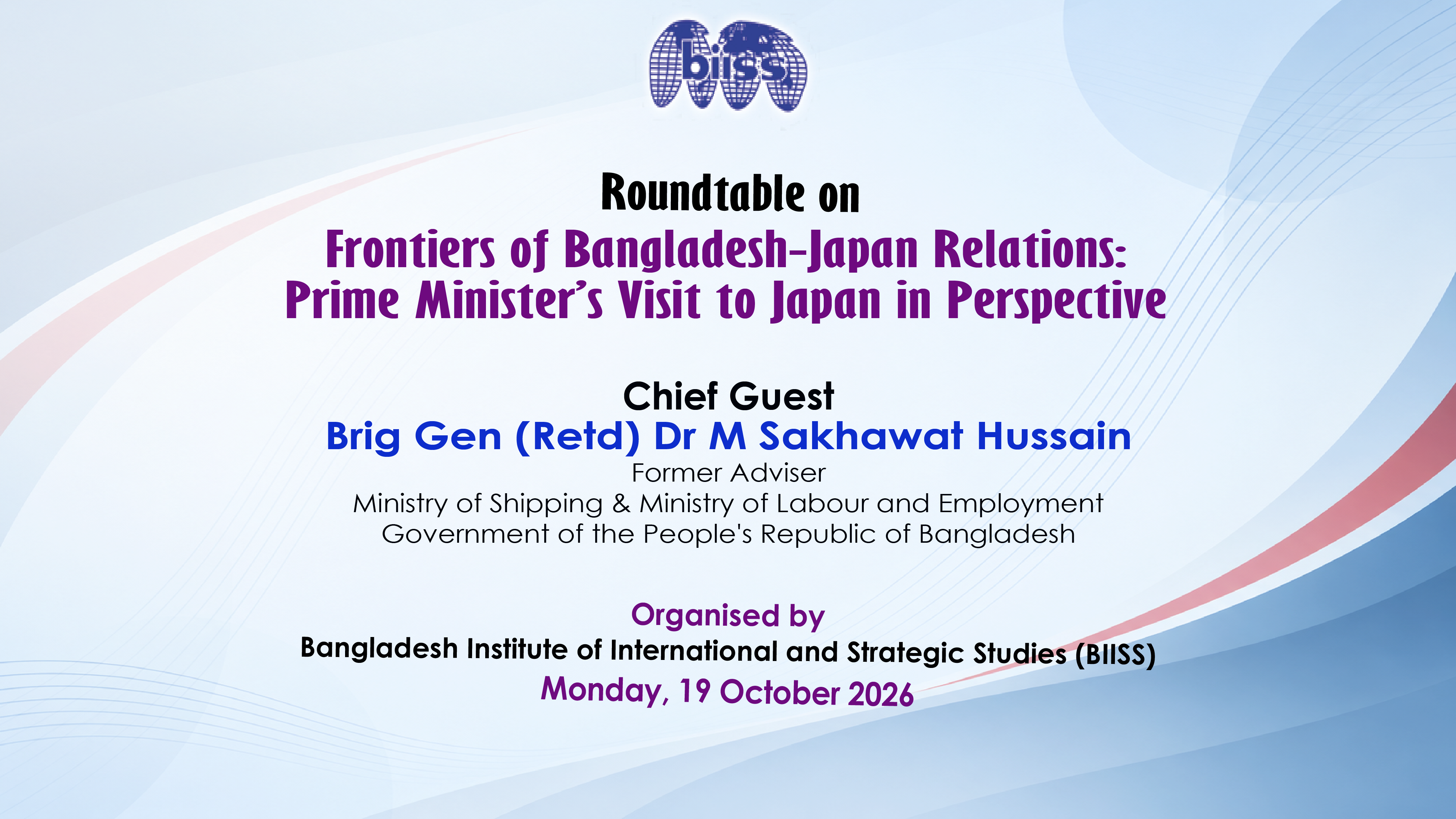
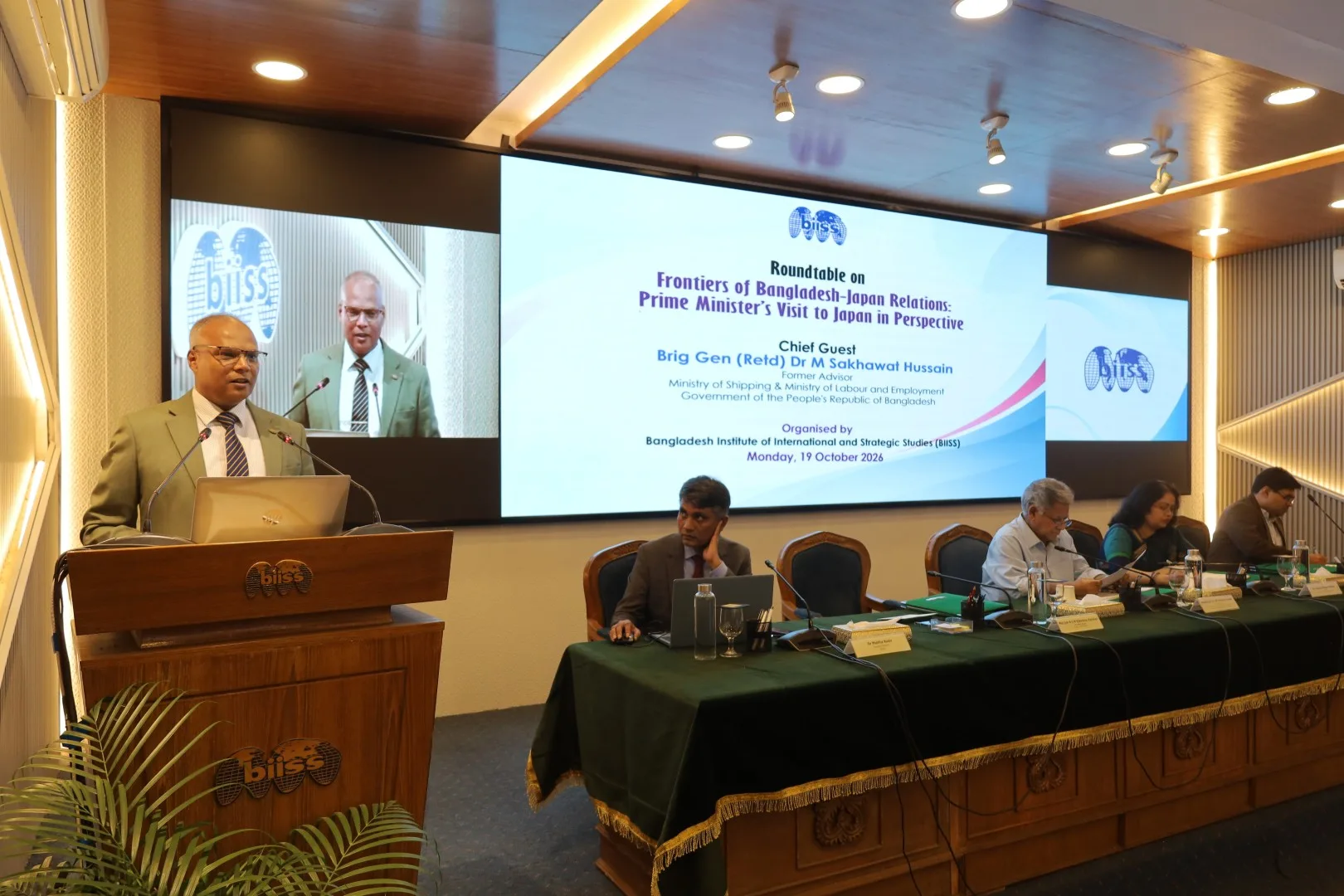
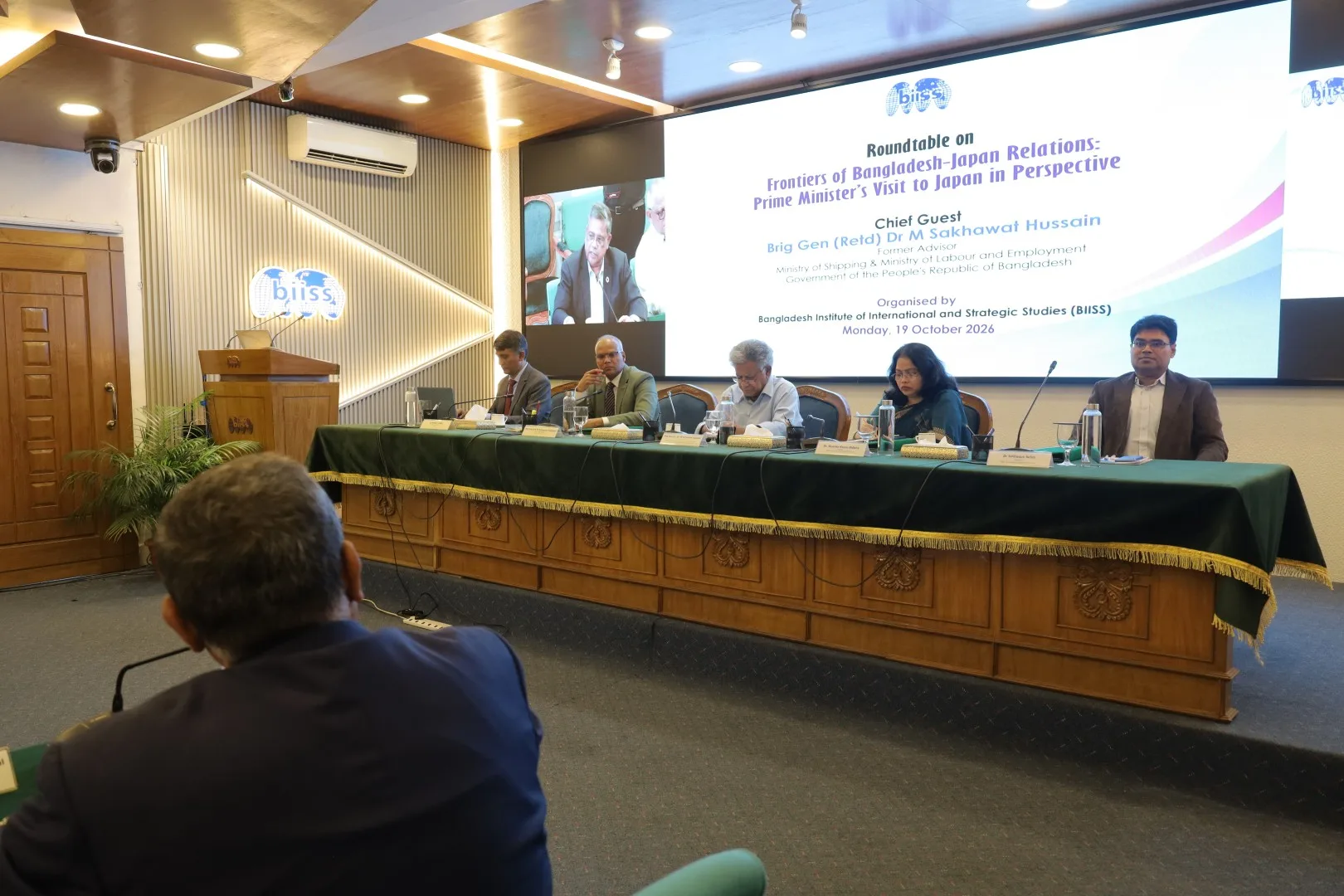
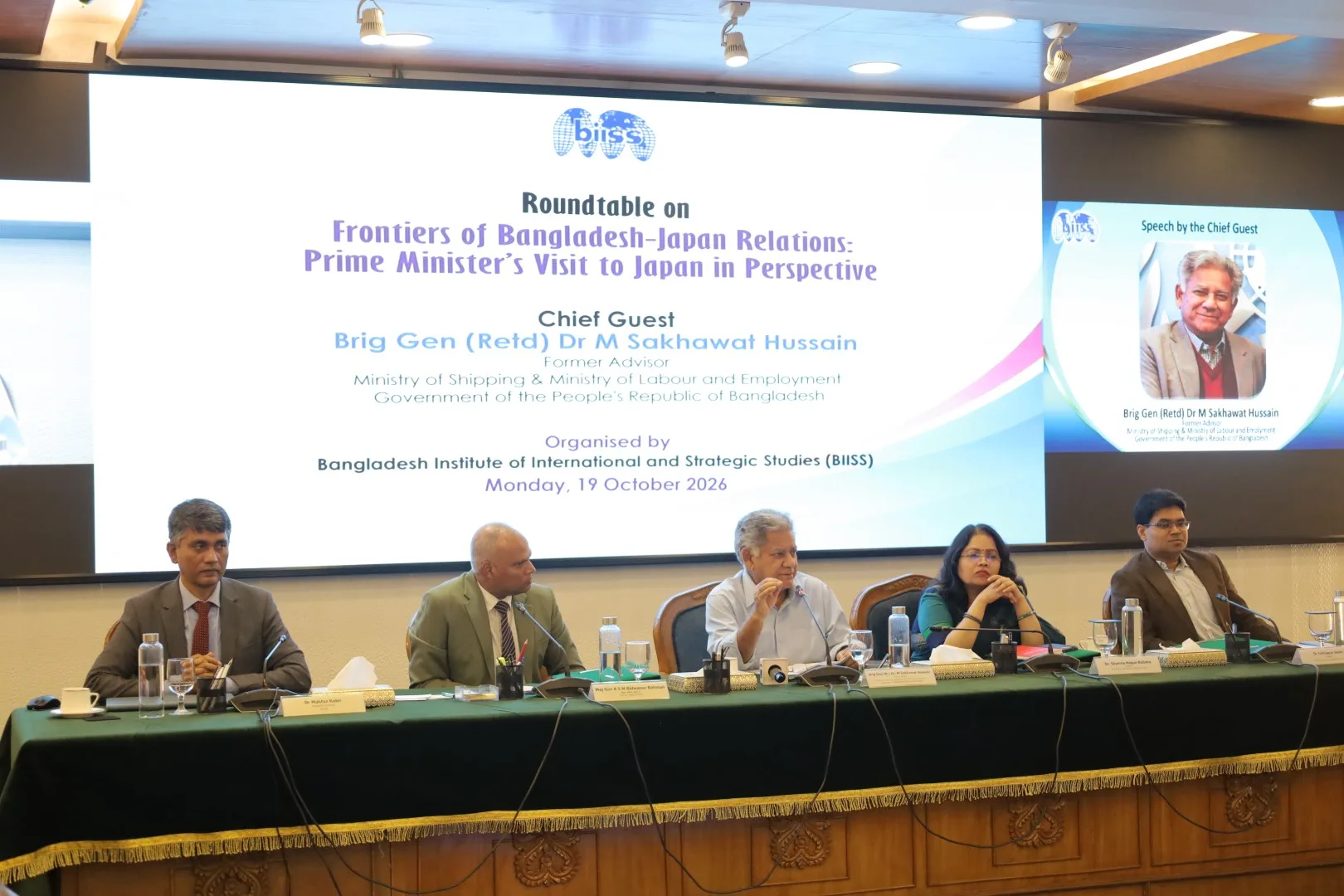
The Bangladesh Institute of International and Strategic Studies (BIISS)
organised a roundtable titled “Frontiers of Bangladesh–Japan Relations:
Prime Minister’s Visit to Japan in Perspective” on Monday, 19 October 2026.
The roundtable examined prospects for strengthening bilateral relations and
explored practical avenues for expanding trade, investment, technology transfer
and development cooperation.
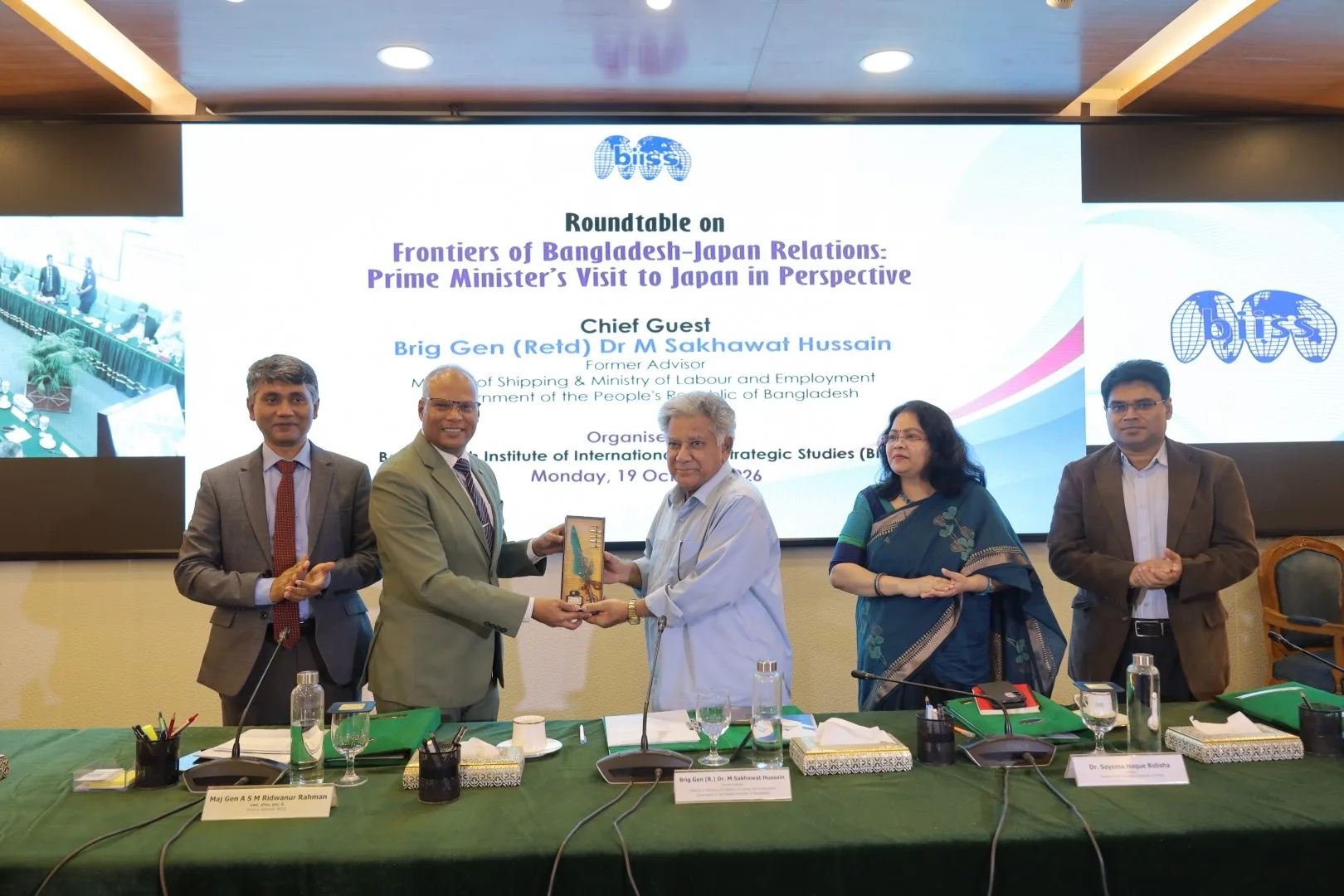
Brigadier General (Retd) Dr M Sakhawat Hossain, Former Adviser to the
Ministry of Shipping, Government of the People’s Republic of Bangladesh,
attended the event as the Chief Guest.
In his welcome address, Major General A S M Ridwanur Rahman, awc, afwc,
psc, G, Director General of BIISS, underscored the importance of sustained
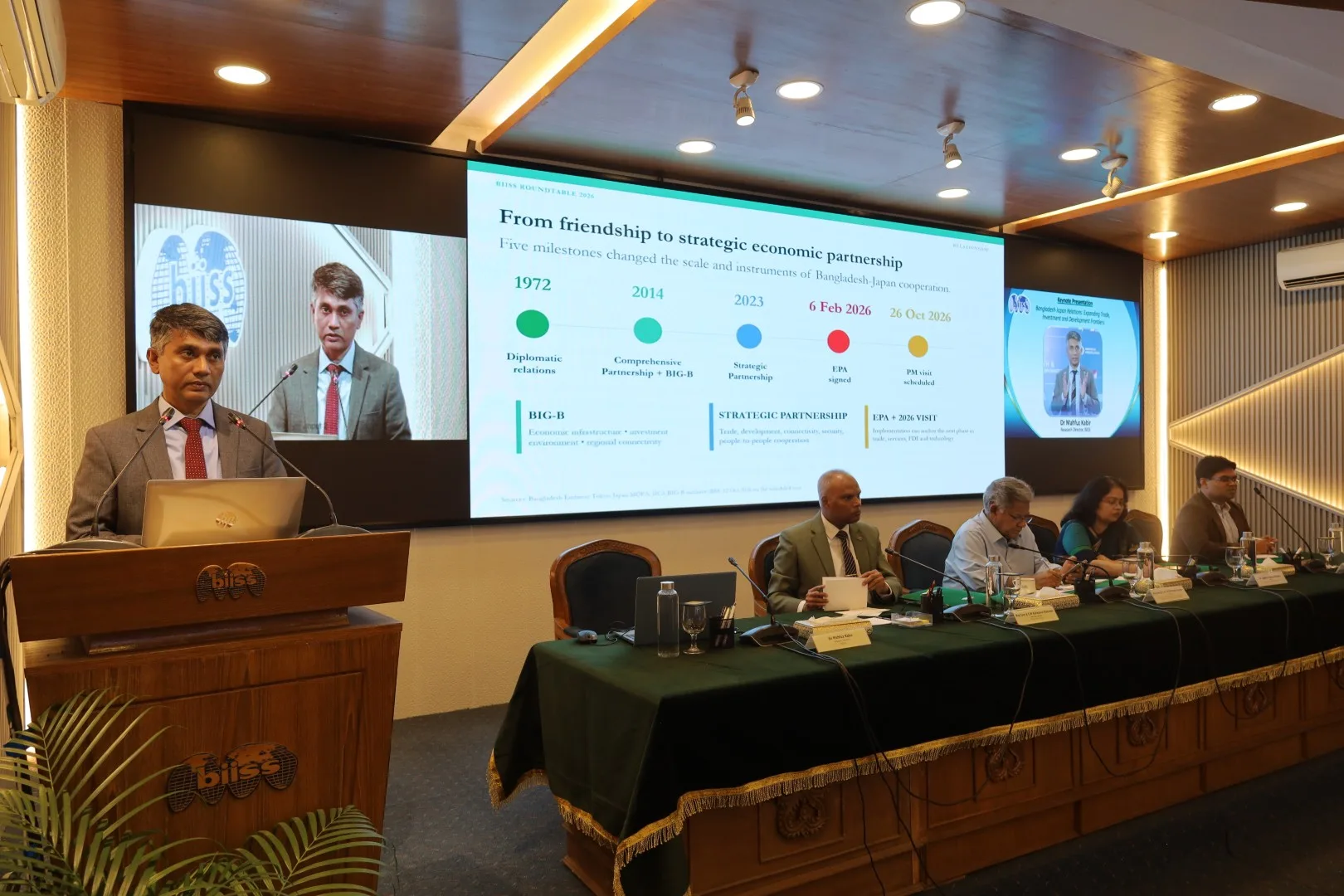
dialogue in advancing Bangladesh–Japan relations. Dr Mahfuz Kabir, Research
Director, BIISS, delivered the keynote presentation titled “Bangladesh–Japan
Relations: Expanding Trade, Investment and Development Frontiers.”
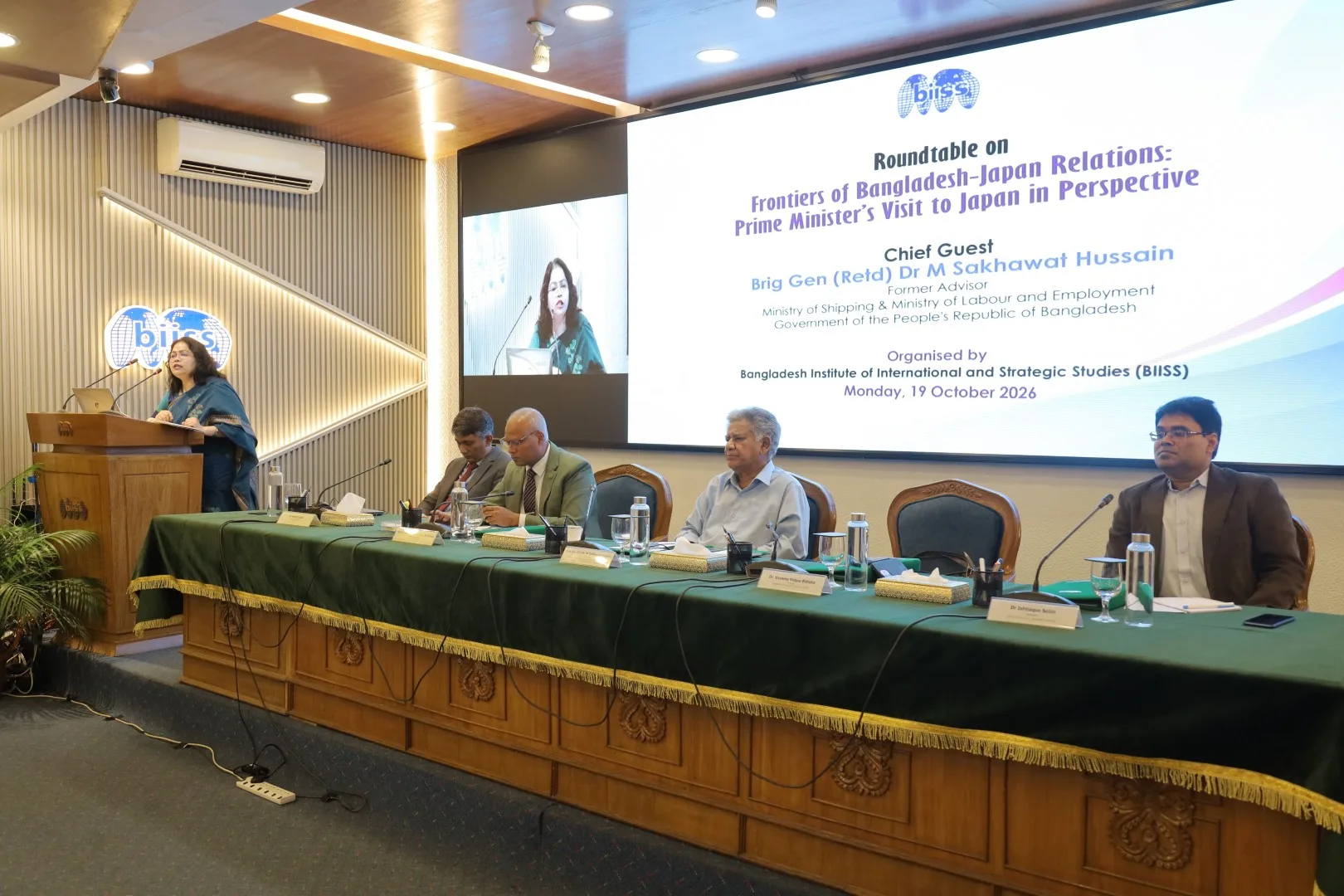
The panel discussion featured Dr Sayema Haque Bidisha, Professor,
Department of Economics, University of Dhaka, and Dr Ishtiaque Selim,
Professor, Department of Economics, Jagannath University. The panellists
discussed opportunities and challenges in bilateral economic engagement,
investment promotion and the future direction of the partnership.
A key focus of the roundtable was the potential of the Japan–Bangladesh
Economic Partnership Agreement (EPA), signed in Tokyo on 6 February 2026, to
promote trade liberalisation, investment cooperation and deeper economic
integration. Participants highlighted the need to diversify Bangladesh’s
exports beyond ready-made garments, attract greater Japanese investment into
productive and technology-intensive sectors, and address regulatory,
infrastructural and skills-related constraints affecting the business environment.
The discussions also emphasised the importance of translating the
longstanding Bangladesh–Japan partnership into a more diversified,
investment-driven and technology-oriented relationship. Participants
highlighted the need for effective institutional coordination, human capital
development and sustained engagement between the two countries to realise the
full potential of bilateral cooperation.
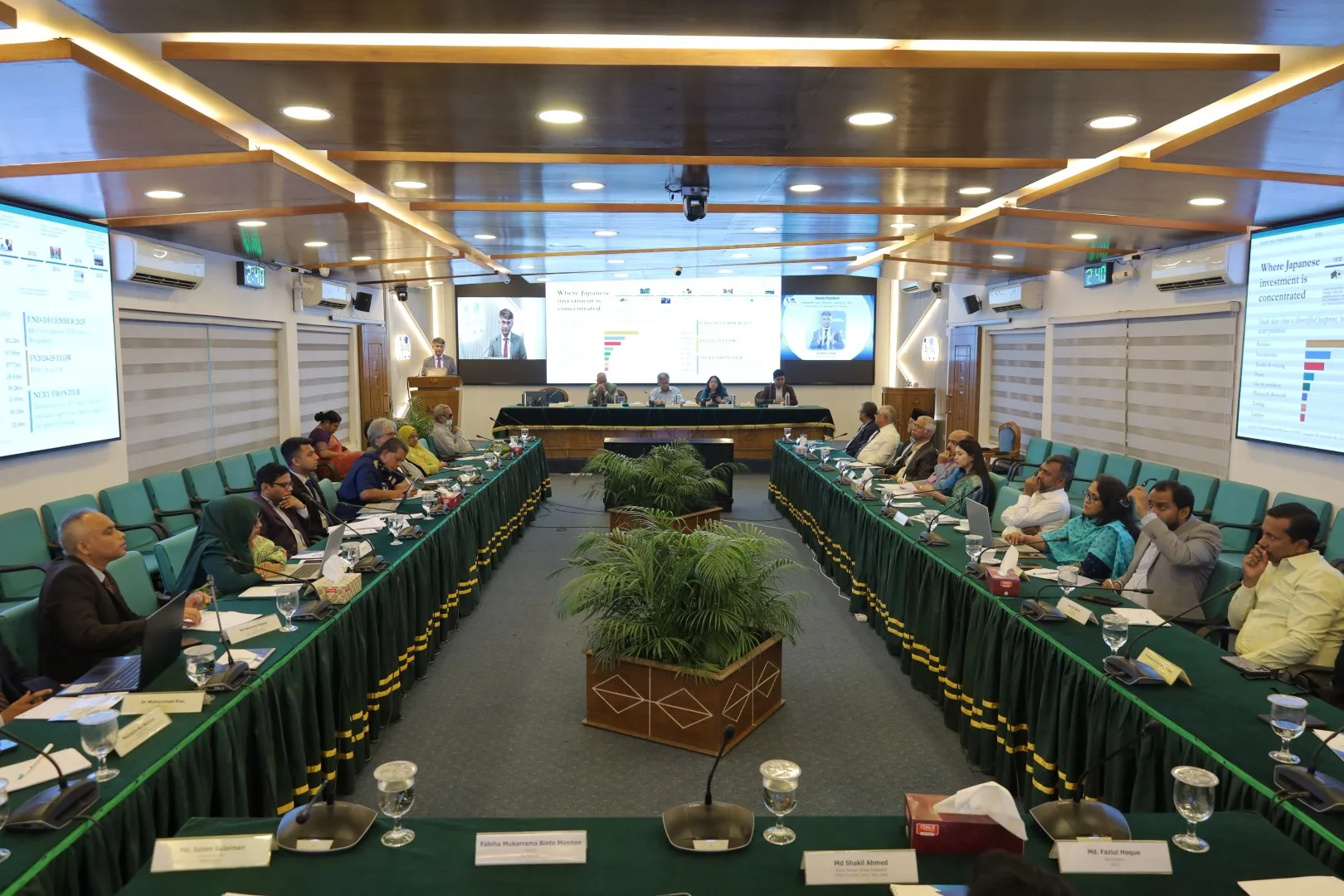
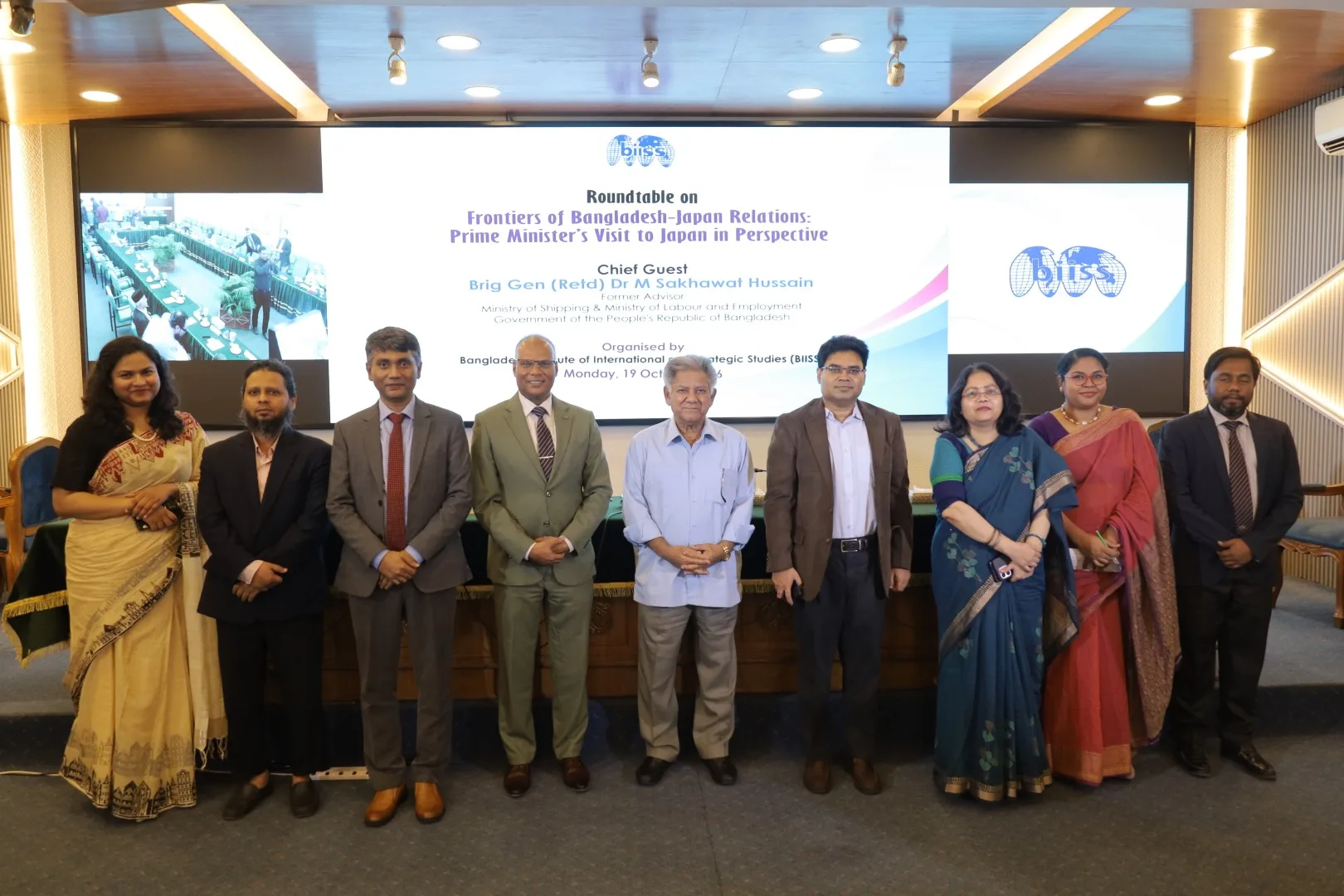
The roundtable brought together policymakers, researchers, academics and
representatives of relevant institutions to assess the evolving
Bangladesh–Japan partnership and develop actionable policy recommendations for
government agencies, businesses and development partners. The event aimed to
help translate high-level diplomatic engagement into tangible economic and
developmental outcomes.