Unpacking
COP30: Progress, Problems and the Path Forward
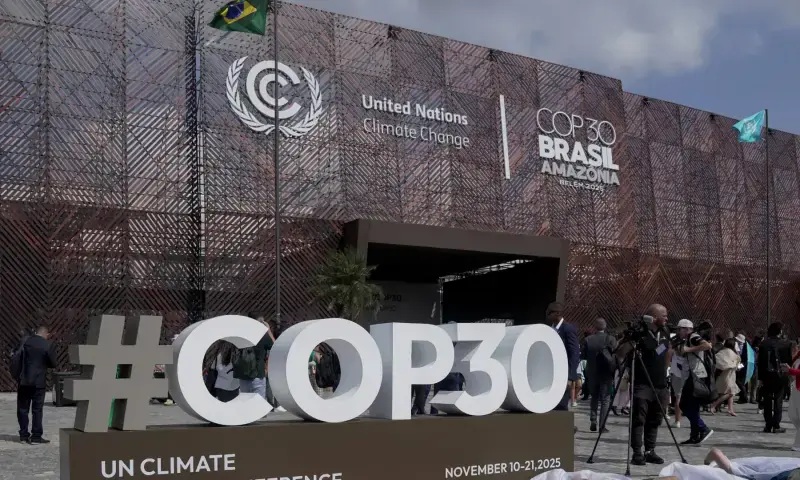
The conclusion of the COP30 in
Belém offers a sobering reflection on the state of global climate governance.
Despite ambitious rhetoric and the unveiling of the “Belém Package,” the
conference ultimately underscored a growing gap between political commitments
and the urgency of climate action. While the summit delivered several
institutional and financial initiatives, it failed to secure decisive
agreements on emissions reductions or fossil fuel phase-outs. These two
measures are essential to meeting the temperature targets of the Paris
Agreement. As a result, the outcome remains far from the trajectory required to
limit global warming to 1.5°C.
This shortfall reflects a
deeper structural challenge within global climate diplomacy. For decades, the
consensus-based negotiation model under the United Nations Framework Convention
on Climate Change (UNFCCC) has served as the primary mechanism for coordinating
international climate action. Yet the very inclusiveness that once made this
model effective now risks slowing progress at a moment when rapid and decisive
action is needed. With nearly two hundred parties involved, reaching binding
commitments increasingly requires compromises that dilute ambition. As COP30
demonstrated, consensus politics may no longer be well-suited to the pace
demanded by the climate crisis.
The geopolitical landscape
further complicates this process. The absence of the United States from the
negotiations created a significant leadership vacuum. Historically, one of the
largest emitters and a major financial contributor to climate initiatives,
Washington’s withdrawal weakens both political momentum and financial capacity
within the global climate regime. Without a central actor capable of mobilising
large-scale commitments, negotiations risk becoming fragmented and less
decisive.
Against this backdrop, a new
model of climate cooperation may be emerging. Increasingly, analysts point to
the rise of “climate clubs”—coalitions of countries willing to pursue ambitious
climate policies outside the slower multilateral process. These coalitions
could coordinate carbon pricing, technology transfers, and green trade
standards among like-minded states. In theory, such arrangements could
accelerate progress by allowing smaller groups of committed actors to move
faster than the broader consensus-driven system.
However, climate clubs are not
a complete replacement for multilateralism. Global climate governance
ultimately requires universal participation to ensure fairness, financing, and
accountability. Instead, these coalitions may function as complementary mechanisms—spaces
where pioneering policies can be developed and later integrated into broader
international agreements.
For climate-vulnerable
countries like Bangladesh, the implications are significant. Bangladesh has
long positioned itself as a constructive actor in global climate negotiations,
advocating strongly for adaptation financing and operationalising the Loss and
Damage framework. In the evolving diplomatic environment, the country must
continue to pursue a dual strategy. First, it should remain an active voice
within the UNFCCC process, working alongside the G77 and other developing
nations to push for stronger financial commitments and equitable climate
policies. Second, Bangladesh should explore partnerships within emerging
climate coalitions, particularly those focused on adaptation technologies,
resilient infrastructure, and green economic transitions.
COP30 may have fallen short of
expectations, but it also signals an important turning point in global climate
diplomacy. As traditional negotiation frameworks struggle to deliver rapid
progress, innovative forms of cooperation will likely shape the next phase of
climate governance. For countries on the front lines of climate change, the
challenge now is not simply to participate in global negotiations—but to
strategically navigate and influence the evolving architecture of climate
action.