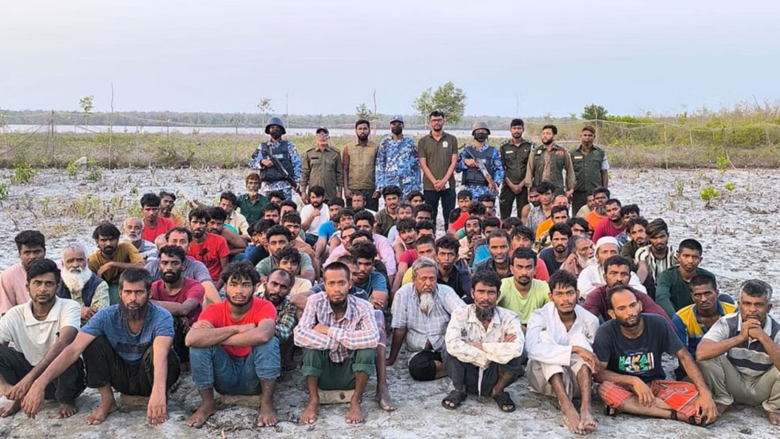
Tensions at the Bangladesh-India Border: An Analysis of Recent “Push-In”
Incidents
Since early May
2025, a serious and provocative challenge has emerged along the
Bangladesh-India border. Beginning on May 6, an estimated 280 individuals have
been forcibly pushed into Bangladeshi territory by Indian border forces. These
incursions have occurred in remote border areas, including Kurigram,
Khagrachari, Sylhet, Moulvibazar, and Chuadanga. They are characterised by
their unilateral nature—executed without the consent or prior consultation of
Bangladeshi authorities. This deliberate action has been met with deep concern
in Dhaka, prompting an official diplomatic note to India on May 9th and raising
fundamental questions about sovereignty, bilateral obligations, and regional
stability.
The practice of
pushing individuals across the border is not new, with instances documented
since the 1990s. However, the scale and orchestrated nature of the current
events mark a significant escalation. Unlike past “pushbacks,” which often
involved the swift return of suspected migrants, these individuals are now
being left on Bangladeshi soil. This development has been described by
Bangladeshi officials, including Lieutenant General Md Jahangir Alam Chowdhury,
as a “well-orchestrated and unjust” act. There are also indications that India
may be planning to push in an additional 200 to 300 individuals, further
exacerbating the situation. The relative silence of the Indian media on these
events only heightens concern, suggesting a deliberate attempt to avoid
scrutiny.
The push-ins
flagrantly disregard existing bilateral mechanisms designed to manage the
border peacefully, such as the 1975 Joint India-Bangladesh Guidelines (JIBG)
for Border Authorities and the 2011 Coordinated Border Management Plan (CBMP).
By bypassing established diplomatic channels and proper verification
procedures, India is undermining decades of cooperative border management.

The
implications for Bangladesh are profound. The immediate impact is a threat to
national sovereignty and the security of its borders. Border communities are
experiencing fear and insecurity, their livelihoods disrupted by these
provocative measures. On a broader scale, these unilateral actions risk
severely damaging bilateral relations, which are crucial for trade,
connectivity, and regional stability. Such incidents can also be exploited by
extremist nationalist factions within India, further poisoning the political
atmosphere and complicating future dialogue.
For Bangladesh,
the time to act is now. A passive response would only encourage further
transgressions. The path forward requires a multi-pronged strategy. Dhaka must
continue to mount strong, principled diplomatic protests while simultaneously
engaging the international community to highlight these violations. On the
ground, strengthening border surveillance and thoroughly documenting each
push-in incident is critical for building an irrefutable case. Concurrently,
every individual pushed into Bangladesh must be treated humanely and verified
through proper procedures. Engaging civil society and all political
stakeholders at home will ensure a unified national stance. In a parallel
measure, the Government of Bangladesh should also address the issue of Indian
nationals working illegally within its own borders, asserting the principle of
reciprocity.
In conclusion,
the recent push-ins are more than a border management issue; they are a
challenge to peace and a test of the resilience of Bangladesh-India relations.
Only through proactive diplomacy, unwavering adherence to international law,
and a concerted effort to uphold bilateral agreements can both nations prevent
further escalation and safeguard the security and sovereignty of the region.