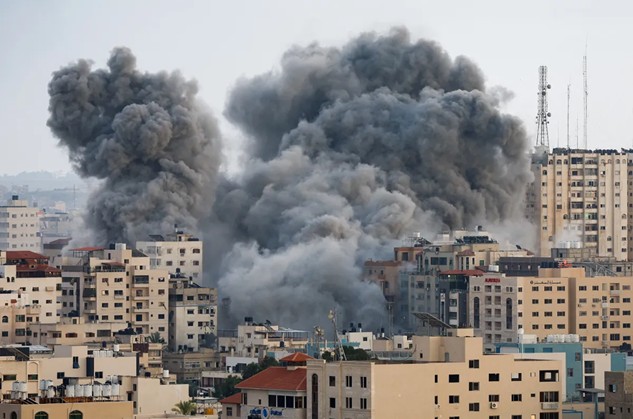
Crisis in Gaza: Role of Regional Countries
The ongoing war in Gaza, which began in October 2023,
represents a profound and escalating humanitarian catastrophe. Despite shifting
global attention, particularly towards the tensions between Israel and Iran,
the conflict in Gaza has continued unabated. The human cost is staggering, with
over 57,000 Palestinians killed and more than 135,000 wounded. The violence has
intensified even amid ceasefire discussions, with Israeli military operations
and evacuation orders now covering over 80% of the territory. A particularly
dire aspect of the humanitarian crisis is the targeting of aid seekers, with
hundreds reported killed while attempting to access assistance at distribution
sites.

Diplomatic efforts to secure a pause in the fighting
have been fragile and fraught with contention. A notable proposal, announced by
former US President Donald Trump, outlined a 60-day ceasefire plan. Its
conditions included a prisoner exchange, the supervised distribution of
sufficient aid, and a phased Israeli troop withdrawal from parts of Gaza. While
Hamas delivered a "positive response," it appended critical
amendments demanding a complete end to the war, a full military withdrawal, and
binding international guarantees. Israeli Prime Minister Benjamin Netanyahu
promptly rejected these demands as "unacceptable," but the subsequent
dispatch of negotiators to Doha indicates that diplomatic channels, however
strained, remain open.
What are the Arab countries doing?
The role of regional powers in this crisis reveals a
significant disconnect between geopolitical alignments and effective conflict
resolution. In recent years, a trend towards normalisation with Israel has been
observed among several Arab states. This shifting dynamic is reflected in their
measured and largely ineffective response to the assault on Gaza. Egypt has
emerged as the most vocal regional actor, driven primarily by the tangible threat
of a prolonged refugee crisis on its border. While the Arab Peace Initiative,
supported by the Organization of Islamic Cooperation (OIC), provides a
collective diplomatic framework, it has yet to translate into substantive
change on the ground.

Qatar plays a unique role as a mediator, leveraging
its hosting of Hamas's political office since 2011 to facilitate talks.
However, its foreign policy is often perceived as an extension of US interests,
potentially limiting its perceived neutrality. Meanwhile, other US-aligned
nations like Saudi Arabia, the UAE, and Jordan have demonstrated their
willingness to cooperate with Israel on regional security, such as blunting
Iranian missile attacks. This cooperation underscores a strategic priority to
counter Iranian influence, which often appears to supersede a concerted effort
to halt the war in Gaza.
In conclusion, the international and regional response
has thus far failed to curb the violence. Israel continues its military
campaigns not only in Gaza but also in cross-border strikes against targets in
Yemen and Lebanon. The ineffectiveness of regional bodies and the cautious
stance of major Middle Eastern powers raise a pivotal question: can these
actors move beyond their strategic calculations and normalization processes to
exert decisive pressure for peace, or will the crisis in Gaza continue to fester,
unanswered by a unified regional stance?