
Bangladesh Institute of International and Strategic Studies
Bangladesh Institute of International and Strategic Studies
Alternative Trading Arrangements on 26 October 2023
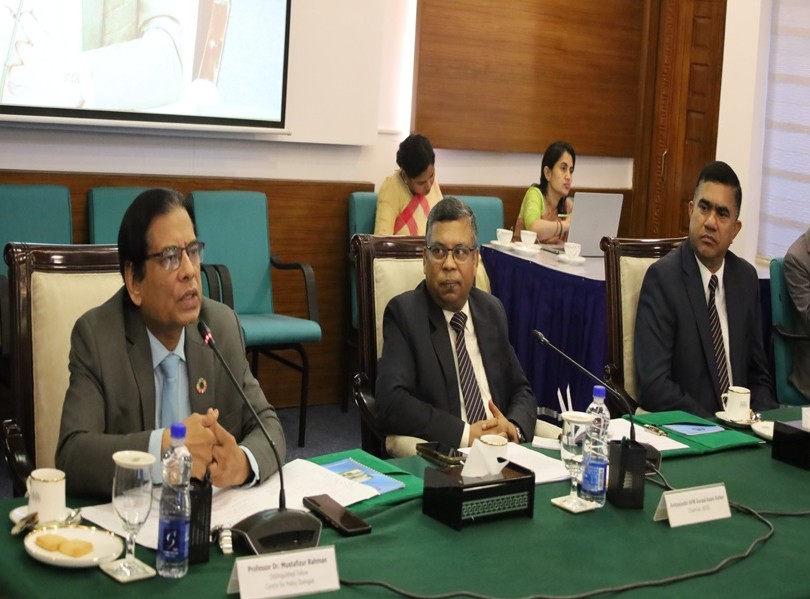
The Bangladesh Institute of
International and Strategic Studies (BIISS) organised a roundtable discussion
titled “Strategic Autonomy of Bangladesh: Alternative Trading Arrangements”
on Thursday, 26 October 2023, at the BIISS Auditorium.
The programme commenced with a
welcome address by Major General Sheikh Pasha Habib Uddin, OSP, SGP, BAMS,
afwc, psc, Director General of BIISS. The session was chaired by Ambassador
A. F. M. Gousal Azam Sarker, Chairman of BIISS, who also delivered the
closing remarks.
In his welcome address, the
Director General highlighted the growing uncertainties in the global economy
arising from the post-pandemic recovery, persistent inflationary pressures, the
Russia–Ukraine war, currency depreciation, and the global dollar shortage. He
emphasised that these developments have constrained the foreign exchange
reserves and economic policy space of many developing countries, making it
imperative for Bangladesh to explore prudent and sustainable alternative
trading arrangements while safeguarding its macroeconomic stability.
The roundtable featured three
keynote presentations. Dr. Benuka Ferdousi, Senior Research Fellow,
BIISS, presented “Alternative Trading Arrangements: Options, Opportunities
and Challenges for Bangladesh,” analysing the prospects and limitations of
conducting international trade in alternative currencies. She identified major
challenges, including Bangladesh’s trade imbalance with key partners, limited
market incentives, and geopolitical risks. She recommended that Bangladesh
adopt a cautious and incremental approach, limiting alternative currency
transactions to export earnings while closely observing international
experiences before undertaking broader reforms.
Dr. Mahfuz Kabir, Research
Director, BIISS, delivered a presentation titled “Supremacy of the US Dollar
and the Future of Other Currencies: Trading Options for Bangladesh.” He
discussed the structural factors behind the global dollar shortage and assessed
the potential role of other major currencies, such as the Japanese Yen, Euro,
and Chinese Yuan, in facilitating international trade. He underscored the
importance of diversifying payment mechanisms and strengthening bilateral
financial cooperation through agreements between central banks.
Professor Dr. Mustafizur
Rahman, Distinguished Fellow, Centre for Policy Dialogue (CPD), highlighted
the need for Bangladesh to diversify its trade, export markets, and currency
arrangements while acknowledging that the US dollar is likely to remain the
dominant global reserve currency for the foreseeable future. He advocated a
gradual and carefully calibrated approach to adopting alternative trading
mechanisms in order to minimise financial risks and maintain economic
stability.