
Bangladesh Institute of International and Strategic Studies
Bangladesh Institute of International and Strategic Studies
Climate diplomacy priorities for Bangladesh—expert panel and open forum.
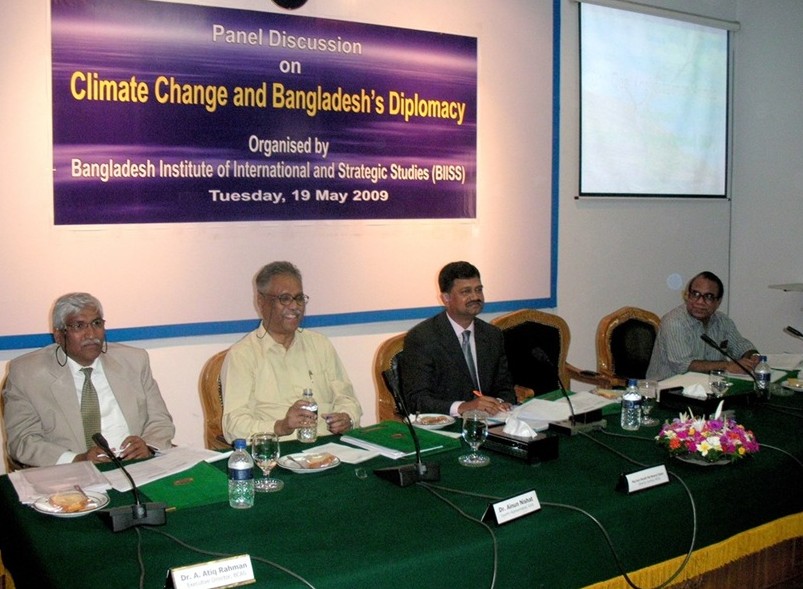
The Bangladesh Institute of
International and Strategic Studies (BIISS) organised a panel discussion titled
“Climate Change and Bangladesh's Diplomacy” on Tuesday, 19 May 2009,
at the BIISS Auditorium.
The panel discussion brought
together diplomats, policymakers, academicians, researchers, environmental
experts, and development practitioners to examine the growing challenges posed
by climate change and their implications for Bangladesh’s foreign policy,
national security, and international engagement.
The speakers highlighted
Bangladesh’s acute vulnerability to the adverse impacts of climate change,
including sea-level rise, extreme weather events, river erosion, flooding,
salinity intrusion, and environmental degradation. They emphasised the importance
of proactive climate diplomacy to safeguard Bangladesh’s national interests,
strengthen international partnerships, mobilise climate finance, facilitate
technology transfer, and advocate for equitable global responses to the
challenges faced by climate-vulnerable countries.
The discussion also focused on
Bangladesh’s role in international climate negotiations under the United
Nations Framework Convention on Climate Change (UNFCCC), regional cooperation
on climate adaptation and disaster risk reduction, and the responsibilities of
developed countries in providing financial, technological, and
capacity-building support in line with the principle of common but
differentiated responsibilities.
Participants underscored the need
for stronger coordination among government institutions, academia, civil
society, and development partners to integrate climate considerations into
national development planning and foreign policy. The panel concluded by
reaffirming the importance of sustained research, policy dialogue, and
effective diplomatic engagement to enhance Bangladesh’s resilience to climate
change and advance sustainable development at both the national and
international levels.