
Bangladesh Institute of International and Strategic Studies
Bangladesh Institute of International and Strategic Studies
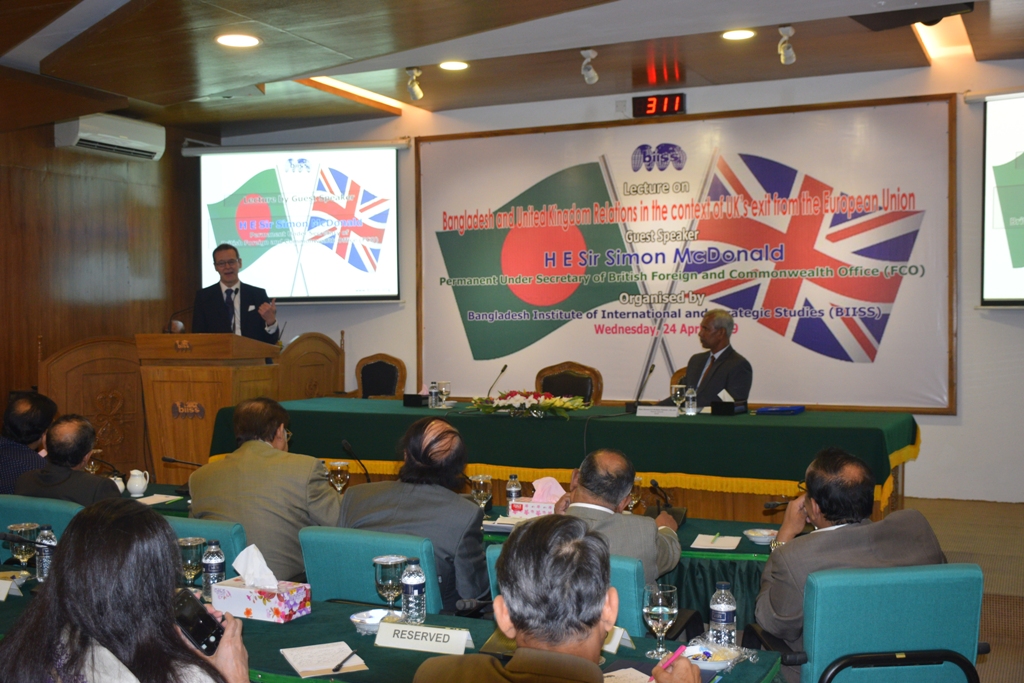
The Bangladesh Institute of
International and Strategic Studies (BIISS) organised a Public Lecture
titled "Bangladesh and United Kingdom Relations in the Context of the
UK's Exit from the European Union" on 24 April 2019 at the
BIISS Auditorium.
H. E. Sir Simon McDonald,
Permanent Under-Secretary of the Foreign and Commonwealth Office (FCO) of
the United Kingdom, attended the programme as the Guest Speaker. Major
General A K M Abdur Rahman, ndc, psc, Director General of BIISS, delivered
the welcome address. The lecture brought together senior government officials,
members of the diplomatic corps, policymakers, academics, researchers, military
officials, media representatives, students, and members of think tanks to
discuss the implications of Brexit for Bangladesh–United Kingdom relations.
In his welcome address, Major
General A K M Abdur Rahman highlighted the longstanding and multifaceted
relationship between Bangladesh and the United Kingdom. He noted that the UK
has been one of Bangladesh's most important development partners and continues
to be among the country's largest sources of foreign direct investment. He also
emphasised the strong historical ties, vibrant Bangladeshi diaspora in the UK,
expanding trade and investment, educational cooperation, and close
collaboration in regional and multilateral forums.
Delivering the keynote lecture, H.
E. Sir Simon McDonald discussed the implications of the United Kingdom's
withdrawal from the European Union and outlined the UK's vision for
strengthening partnerships beyond Europe. He emphasised that the UK attaches
great importance to its relations with Commonwealth countries and sees
Bangladesh as a key partner in promoting shared prosperity, economic growth,
and sustainable development.
The Guest Speaker highlighted the
expanding scope of Bangladesh–UK cooperation in trade and investment, retail,
banking, energy, infrastructure, consultancy services, education, and skills
development. He reaffirmed the UK's commitment to increasing investment in
Bangladesh and strengthening collaboration in innovation, technology, climate
resilience, and human capital development. He also expressed confidence that
Brexit would create new opportunities for enhancing bilateral trade, expanding
market access, and deepening economic engagement between the two countries.
The lecture further explored the
future trajectory of Bangladesh–UK relations in the evolving global economic
and geopolitical landscape. Participants discussed opportunities for
strengthening strategic dialogue, promoting business partnerships, expanding
educational and cultural exchanges, and enhancing cooperation in addressing
global challenges, including climate change, migration, and sustainable
development.
The programme concluded with an
engaging interactive discussion session, during which participants shared
valuable questions, opinions, comments, and recommendations on the future of
Bangladesh–United Kingdom relations in the post-Brexit era. The event reaffirmed
the shared commitment of both countries to further strengthening their
longstanding partnership through enhanced diplomatic engagement, increased
economic cooperation, and closer people-to-people connectivity.